
Ayurvedic Rheumatoid Arthritis Treatment in Kerala
Quick summary
- Rheumatoid arthritis is an autoimmune disease, not ordinary age-related joint wear.
- According to the World Health Organization, approximately 18 million people were living with rheumatoid arthritis worldwide in 2019, and about 70% were women.
- Early diagnosis and appropriate treatment can help control inflammation, protect joint function, and reduce the risk of disability.
- Therapies and herbal preparations are not suitable for everyone. A consultation and safety review are required before treatment.
Rheumatoid arthritis (RA) is a long-term autoimmune disease that can cause painful, swollen, and stiff joints. Medical treatment is important because uncontrolled inflammation may permanently damage joints and can affect other parts of the body.
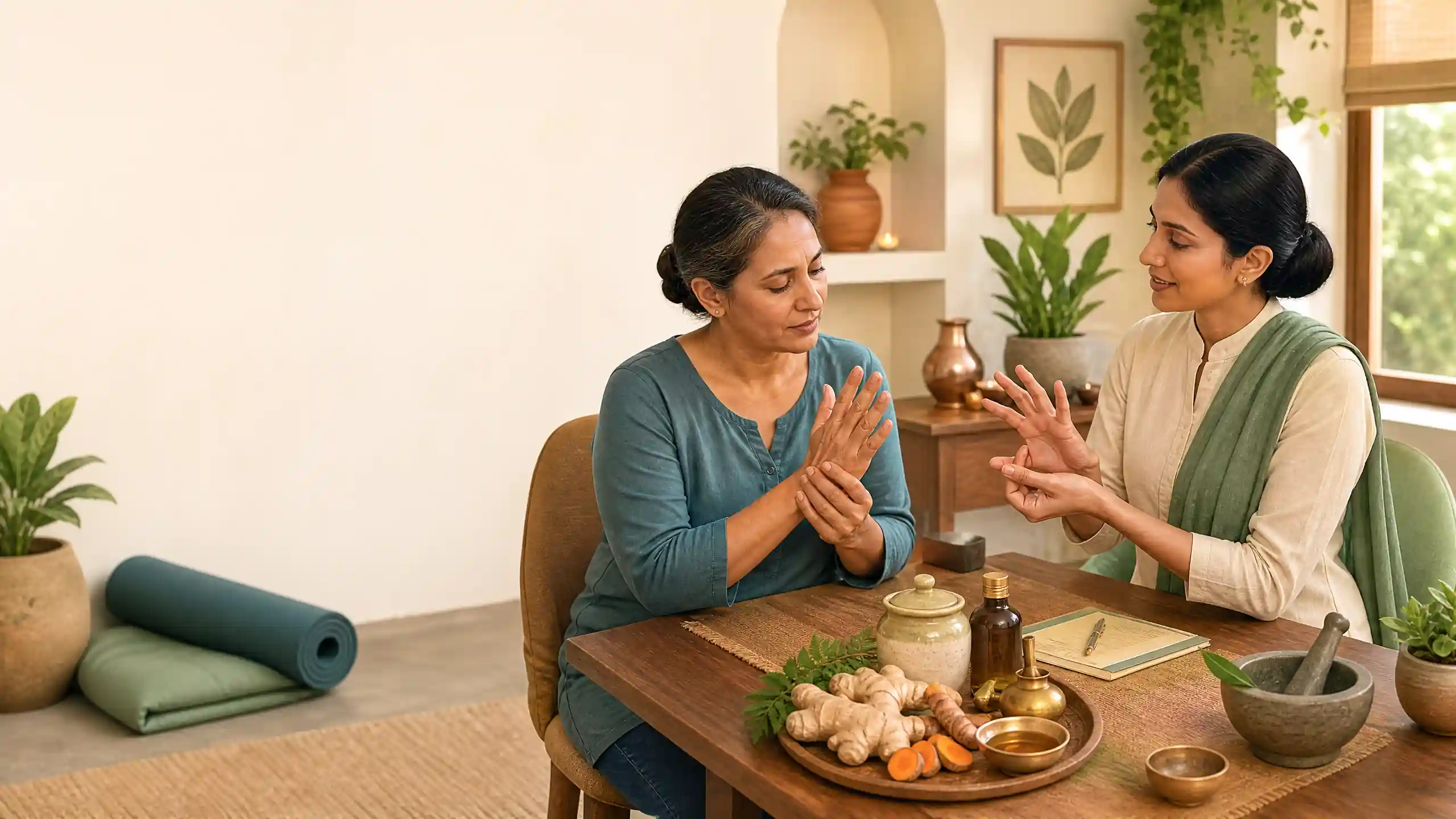
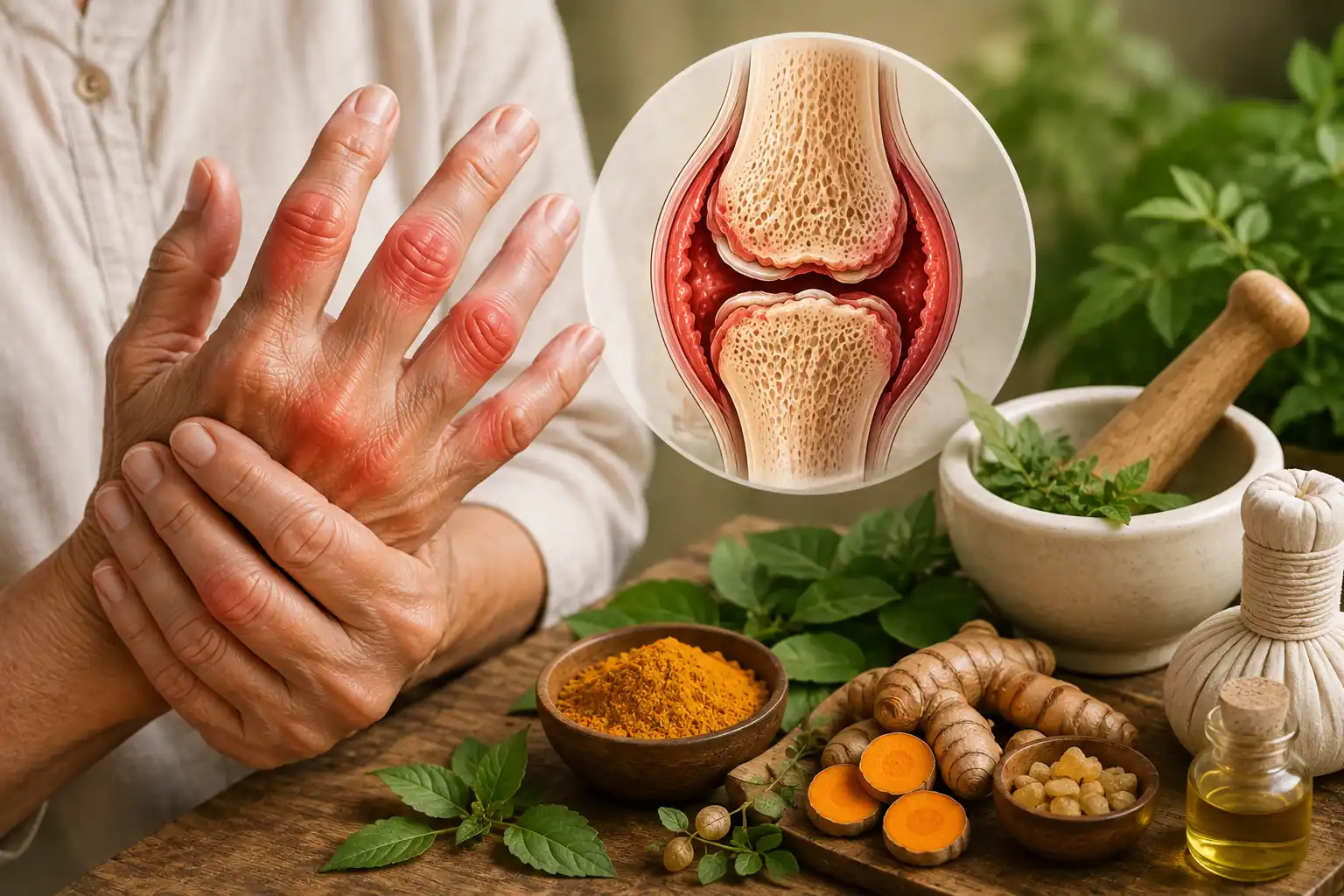
Dheemahi Ayurvedic Village in Kumarakom, Kerala, provides physician-led Ayurvedic support for people living with rheumatoid arthritis. Care is personalised after reviewing the person’s diagnosis, symptoms, medical history, current medicines, and treatment goals. It may include selected Ayurvedic therapies, diet and lifestyle guidance, gentle movement and follow-up.
Ayurvedic care should be used as complementary support, not as a replacement for rheumatology care or prescribed disease-modifying medicines. Current evidence does not show that Ayurveda cures rheumatoid arthritis, and individual results vary.
Medical safety note: Do not stop, reduce, or replace prescribed rheumatoid arthritis medicine without speaking to the clinician who prescribed it. Early treatment and regular rheumatology follow-up can help control inflammation and reduce the risk of joint damage, according to the American College of Rheumatology.
What is rheumatoid arthritis?
Rheumatoid arthritis is a chronic autoimmune disease. This means the immune system mistakenly attacks healthy tissue, particularly the lining of the joints. The resulting inflammation can cause pain, warmth, swelling, stiffness, and reduced movement.
RA commonly affects the small joints of the hands, wrists and feet, often on both sides of the body. It can also affect larger joints and, in some people, the lungs, heart, eyes or other organs.
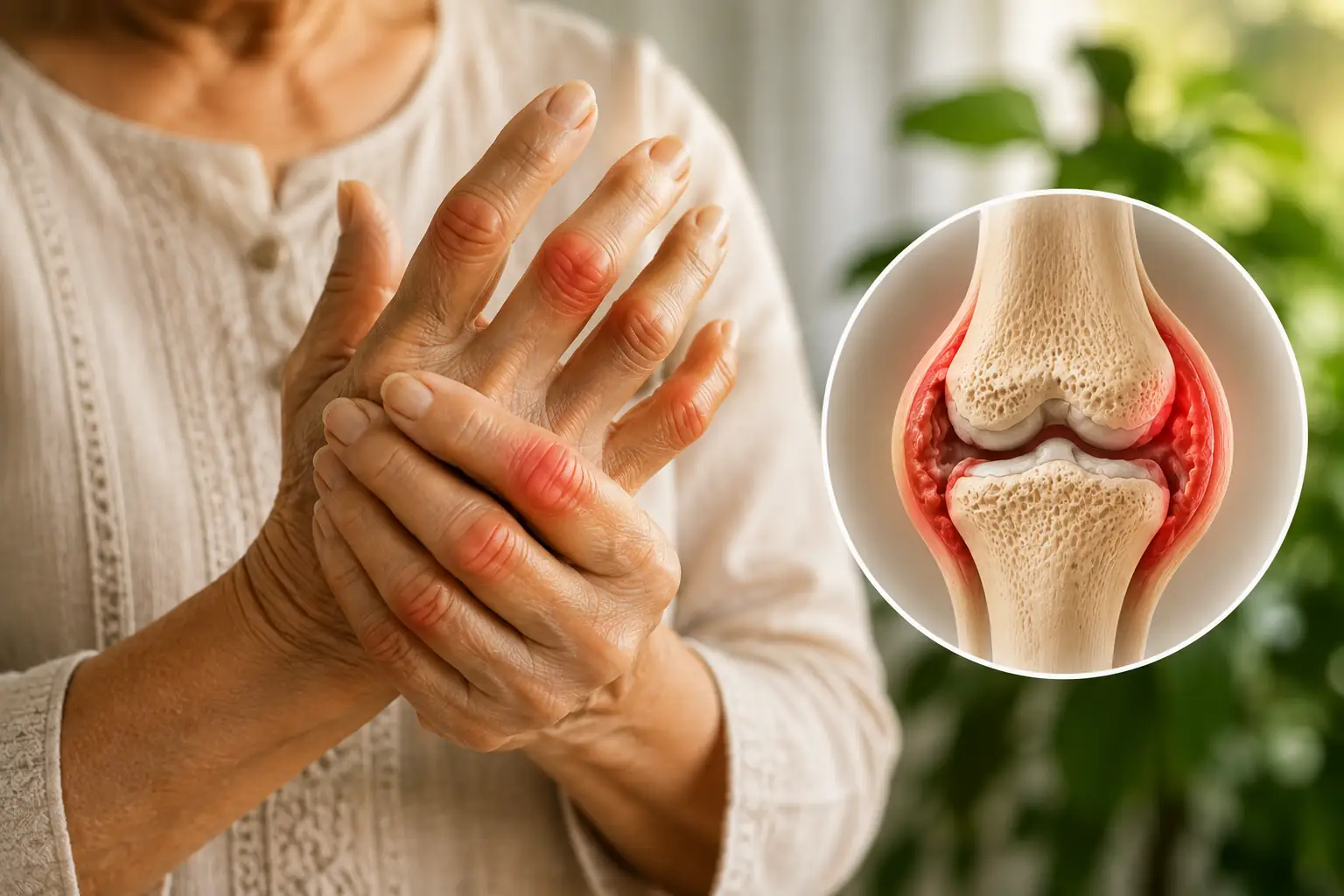
RA is different from osteoarthritis. Osteoarthritis mainly involves changes in joint cartilage and surrounding tissue, while rheumatoid arthritis is driven by immune-system inflammation. The conditions require different clinical assessment and management.
For a detailed explanation of early signs, risk factors and warning symptoms, read our guide to rheumatoid arthritis symptoms and causes
What symptoms need medical assessment?
According to the US National Institute of Arthritis and Musculoskeletal and Skin Diseases, common RA symptoms include:
Common RA symptoms include:
- joint pain, tenderness, warmth or swelling;
- stiffness after waking or resting, often lasting more than 30 minutes;
- symptoms affecting similar joints on both sides of the body;
- difficulty making a fist, walking, dressing or completing other daily activities;
- fatigue, low energy, reduced appetite or an occasional low-grade fever.
These symptoms can occur with several conditions. They do not confirm rheumatoid arthritis. A qualified medical professional must make the diagnosis.
When should you seek prompt medical care?
Arrange a medical assessment if joint pain, swelling, or prolonged morning stiffness persists, affects several joints, or interferes with everyday activities. Seek urgent care for severe breathing difficulty, chest pain, sudden weakness, a very hot and swollen joint with fever, or signs of a serious reaction to a medicine or herbal product.
How is rheumatoid arthritis diagnosed?
There is no single test that diagnoses RA in every person. A clinician may use:
- symptom and medical history;
- physical examination of the joints;
- blood tests such as rheumatoid factor, anti-CCP antibodies, ESR and CRP;
- other tests to assess general health or rule out different conditions;
- imaging such as X-ray, ultrasound or MRI when appropriate.
Some people with RA have normal antibody tests, while a positive test does not always mean that a person has RA. Diagnosis should therefore be made by an appropriately qualified medical professional, often a rheumatologist.
Traditional Ayurvedic assessment may contribute to planning complementary Ayurvedic care, but it should not be presented as a substitute for medical diagnosis, laboratory testing or imaging.
Why is early conventional treatment important?
The goals of established RA treatment include controlling inflammation, relieving symptoms, protecting joints, and maintaining everyday function. Medical care may involve disease-modifying antirheumatic drugs (DMARDs), other medicines, physical or occupational therapy, monitoring, and, in some cases, surgery.
Joint damage that has already occurred is generally not reversible. This is why complementary care must not delay rheumatology assessment or replace effective disease-modifying treatment.
What does the evidence say about Ayurveda for rheumatoid arthritis?
Ayurveda has a long history of traditional use, but evidence for its effectiveness in rheumatoid arthritis remains limited. Some studies have investigated Ayurvedic programmes, herbs, and supportive practices, but differences in treatment methods and limitations in study quality make firm conclusions difficult.
The US National Center for Complementary and Integrative Health reports that relatively few well-designed clinical trials of Ayurvedic approaches are available. Therefore:
- Ayurveda should not be described as a proven cure for rheumatoid arthritis.
- Traditional use should not be presented as established clinical evidence.
- Testimonials cannot prove that a treatment is effective.
- Claims about stopping disease progression, repairing joints, or preventing deformity require reliable clinical evidence.
- Complementary care should not delay diagnosis or replace prescribed disease-modifying treatment.
Who may consider Ayurvedic support?
An assessment may be relevant for an adult who:
Has already received an appropriate medical evaluation or RA diagnosis
Wants supportive care alongside—not instead of—medical treatment
Understands that outcomes cannot be guaranteed
Is looking for individual guidance on routine, movement, rest, diet, and well-being
Is willing to share current prescriptions, test results, and medical history
Suitability depends on the person’s condition, disease activity, medicines, other illnesses and the proposed therapies.
Who may need extra caution or a different plan?
Tell the physician about all health conditions, medicines, supplements, and recent procedures. Extra caution, medical clearance or postponement may be needed for people who are:
- pregnant, planning pregnancy or breastfeeding;
- children, frail older adults or recovering from surgery;
- living with significant heart, kidney or liver disease;
- experiencing fever, active infection, dehydration or severe anaemia;
- taking anticoagulants, immune-suppressing medicines or multiple medicines;
- having a severe RA flare or new unexplained symptoms;
- allergic to or sensitive to herbs, oils or other treatment ingredients.
This is not a complete contraindication list. The treating clinician must review the safety of the specific proposed procedure or product.
What may be included in an Ayurvedic care programme?
No single programme is suitable for everyone. Depending on the assessment, an Ayurvedic physician may consider a combination of traditional therapies, lifestyle support, and follow-up.
| Component | Purpose within the programme | Important limitation or safety point |
| Physician consultation | To understand the individual and select appropriate care | Does not replace rheumatology diagnosis or monitoring |
| Diet and routine guidance | To support regular meals, rest and general well-being | Must account for nutrition, diabetes, allergies and other medical needs |
| Gentle movement or yoga | To support mobility, strength, relaxation and confidence | Activity should be adapted to pain, inflammation and physical ability |
| External Ayurvedic therapies | Traditionally used to support comfort and relaxation | Oils, heat and pressure may be unsuitable during some conditions or active inflammation |
| Selected Panchakarma procedures | Used within classical Ayurveda after individual assessment | Not appropriate for everyone; procedures require clear indications, contraindication screening and supervision |
| Ayurvedic formulations | Selected by the practitioner for the individual plan | Products can cause adverse effects or interact with medicines; quality and ingredient transparency matter |
| Education and follow-up | To help the person understand the plan and continue appropriate routines | Must not include instructions to stop prescribed medicines |
What can a person realistically expect?
The purpose of complementary care should be agreed upon during consultation. Depending on individual circumstances, goals may include support with comfort, movement, sleep, stress management, daily routine or general well-being.
No provider can predict or guarantee a particular outcome. Ayurvedic care has not been established as a cure for rheumatoid arthritis and should not be claimed to reverse existing joint damage or replace DMARDs.
What this programme cannot promise
- A permanent cure for rheumatoid arthritis
- The same result for every person
- Reversal of established joint or organ damage
- Freedom from all medicines
- Zero side effects or risk
- A fixed programme suitable for everyone
How can Ayurvedic care fit with a wider RA plan?
| Part of care | Main role |
|---|---|
| Rheumatology care | Diagnose RA, assess disease activity and prescribe treatment intended to control autoimmune inflammation |
| Medicines such as DMARDs | Help slow or change disease progression and reduce the risk of damage |
| Physical and occupational therapy | Support strength, mobility, joint protection and daily activities |
| Appropriate exercise | Support fitness, muscle strength and function when adapted to the individual |
| Nutrition and smoking cessation | Support general health and may help address modifiable health risks |
| Complementary Ayurvedic care | May provide individualised supportive care alongside appropriate medical management |
The safest approach is coordinated care. Bring your diagnosis, recent reports and a complete medicine list to the consultation.
Frequently Asked Questions
Can I receive Ayurvedic care while taking RA medicines?
Possibly, but both clinicians need a complete list of your medicines, herbs and supplements. Some products can interact with prescribed treatment or affect the liver, kidneys, bleeding or immune function. Do not stop or change an RA medicine unless the prescribing clinician advises it.
Is Panchakarma suitable during an active rheumatoid arthritis flare?
Not necessarily. Suitability depends on the severity of the flare, general health, hydration, medicines and the specific procedure being considered. A clinician should assess new or worsening swelling, pain, fever or loss of function before an intensive procedure is planned.
How long does an Ayurvedic programme for RA take?
There is no universal duration. It depends on the person’s health, treatment goals, proposed therapies and response. Dheemahi should recommend a duration only after assessment and explain what can realistically be achieved during that period.
Is rheumatoid arthritis the same as osteoarthritis?
No. Rheumatoid arthritis is an autoimmune inflammatory disease. Osteoarthritis mainly involves changes in joint cartilage and surrounding tissue. Because management differs, persistent joint symptoms need an appropriate diagnosis rather than self-treatment.
Can Ayurveda replace physiotherapy or exercise?
No. Ayurvedic care should not replace a physiotherapy or exercise programme recommended by a qualified healthcare professional. Physical and occupational therapy can help maintain strength, mobility, joint protection and everyday function. Exercise should be adapted to the person’s condition, particularly during active inflammation or severe pain.
What conditions can Ayurveda help manage?
Our personalized programs support individuals experiencing:
- Stress and burnout
- Chronic fatigue
- Digestive disorders
- Arthritis and joint pain
- Back and neck pain
- Migraine
- Lifestyle disorders
- Obesity
- Skin conditions
- Sleep disturbances
- Hormonal imbalance
- General wellness and preventive healthcare
Speak with the Dheemahi clinical team
If you are considering complementary Ayurvedic support for rheumatoid arthritis, share your medical reports and current medication list before booking. A physician can review whether an assessment is appropriate and explain the possible programme, limitations, safety considerations, expected duration, and follow-up.
Medical references
World Health Organization – Rheumatoid arthritis. Published 28 June 2023.
NIAMS – Rheumatoid Arthritis: Symptoms, Causes and Risk Factors. Reviewed November 2022.
NIAMS – Rheumatoid Arthritis: Diagnosis, Treatment and Steps to Take. Reviewed November 2022.
Medically Reviewed By
Dr. Peter
Ayurvedic Physician | Dheemahi Ayurvedic Village
This page has been medically reviewed to ensure that the information on Ayurvedic rheumatoid arthritis treatment, therapies, suitability, and safety is clear, accurate, and appropriate for wellness guidance.
Medical Review: Ayurvedic Treatment for Rheumatoid arthritis
Reviewed On: 24 September 2026

How Our Booking Process Works
The unique approach involves a series of discussion during your initial decision-making process to make sure that we will be able to match your expectations with our treatment.
Based on the discussions with you our team of expert doctors will design the best treatment package personalized for your needs.
01
Consultation Form
Fill out our consultation form, and let us know when will you be available for our doctor to talk to you
02
Discussion with Doctor
Discuss your health condition and expectations with our doctor.
03
Booking Confirmation
Confirm the booking by making a payment of 50% advance.
Consultation Form
Submit this form to initiate a booking with us
Have any queries? We will help you. Talk to us now
Say Goodbye to Health Woes & Hello to Healthy Living
Dheemahi Ayurvedic Pvt Ltd
12/386 Varaputhara Road
Kumarakom, Kerala, India
Pin 686563
Dheemahi Ayurvedic Centre, Near Neelimangalam Bridge, Kumaranaloor, Perumbaikad.P.O, Kottayam, Kerala, India, Pin 686016
Other Treatments
Karkidaka Chikilsa | Ayurvedic Treatment for Depression | How to Reduce Stress Naturally | Autoimmune Disorders | Weight-Loss Treatment | Frozen Shoulder Ayurvedic Treatment | Diabetes Ayurvedic Treatment | PCOS Ayurvedic Treatment | Celiac Disease Treatment | ayurvedic treatment for skin diseases | nervous system ayurvedic treatment | Back Pain Ayurvedic Treatment | Cervical Spondylitis Ayurvedic Treatment | ayurvedic treatment for blood sugar | Fatty Liver Ayurvedic Treatment | Knee Pain Ayurvedic Treatment | Migraine Ayurvedic Treatment | Osteoarthritis Ayurvedic Treatment | Psoriasis Ayurvedic Treatment | Sinusitis Ayurvedic Treatment | Ayurvedic Detox Treatment | Ayurvedic Treatment for Rheumatoid Arthritis | Ayurvedic treatment for joint pain | Ayurvedic treatment for ulcerative colitis | Panchakarma Treatment |