
Knee Pain Ayurvedic Treatment in Kerala
Knee pain can have many causes, and the right approach depends on what is causing the symptoms, how long they have been present, and how they affect movement. At Dheemahi Ayurvedic Village in Kumarakom, Kerala, knee-pain care begins with a doctor-led assessment rather than a predetermined treatment package.
Ayurvedic care may be considered as a complementary approach for selected people with knee pain, particularly when the aim is to support comfort, mobility and day-to-day function. It should not be presented as a cure for osteoarthritis, cartilage damage or other structural conditions.
Quick Summary
- Knee pain can result from osteoarthritis, injury, tendon or ligament problems, bursitis, gout and other conditions.
- A consultation is important before selecting Ayurvedic therapies.
- The doctor considers your symptoms, medical history, previous investigations, medicines and general health.
- Depending on the assessment, Ayurvedic therapies may include external therapies, massage, therapeutic heat applications, prescribed internal preparations or other classical procedures.
- The purpose of treatment may be to support pain management, mobility and function rather than to claim structural repair.
- Evidence for Ayurveda in knee osteoarthritis remains limited, so outcomes can vary.
- Severe pain, major swelling, deformity, inability to bear weight, or a hot/red knee with fever requires prompt medical assessment.
When Should You Seek Medical Assessment for Knee Pain?
Knee pain should not automatically be assumed to be age-related or due to osteoarthritis.
Seek prompt medical attention if the knee is very painful, you cannot move it or put weight on it, it is badly swollen or has changed shape, or it becomes hot and red together with fever or feeling unwell. These symptoms can sometimes indicate an injury or infection requiring medical assessment.
Ayurvedic care should not delay recommended investigation or treatment for a potentially serious condition.
If your knee pain followed a significant injury, or you have been advised to undergo imaging, physiotherapy, specialist review, or another form of treatment, discuss your plans with the relevant healthcare professional before beginning complementary care.
Why Does Knee Pain Need Individual Assessment?
“Knee pain” is a symptom rather than a single diagnosis.
It can occur with:
- Osteoarthritis
- Sprains and strains
- Tendon problems
- Meniscus or cartilage injuries
- Ligament injuries
- Bursitis
- Gout
- Inflammatory joint conditions
- Previous injuries or overuse
- Other musculoskeletal conditions
The NHS notes that the cause of knee pain determines the appropriate treatment and that different conditions can produce similar symptoms.
For this reason, the first step at Dheemahi is not to assume that every person with knee pain needs the same Ayurvedic therapy.
What Happens During a Knee Pain Consultation?
Your consultation provides an opportunity for the doctor to understand the nature of your knee problem before suggesting a programme.
The discussion may cover:
Your main symptoms
The doctor may ask about pain, stiffness, swelling, movement limitations, and how the symptoms affect everyday activities.
Duration and pattern
You may be asked when the problem started, whether it is continuous or intermittent, and whether particular activities make it worse.
Previous injuries
A history of falls, sports injuries, twisting injuries or previous knee problems can be important.
Medical history
Existing diagnoses, previous procedures, allergies and other health conditions should be discussed.
Current medicines and supplements
Bring a current list of medicines and supplements. This is particularly important if you are considering Ayurvedic internal preparations.
Previous investigations
If you have X-rays, MRI reports, blood test results or other relevant medical records, sharing them can help provide useful context.
Ayurvedic assessment
Where appropriate, the practitioner may also use traditional Ayurvedic assessment methods and consider factors such as Prakriti and the Ayurvedic understanding of the presenting condition.
Traditional Ayurvedic concepts should be understood as part of the Ayurvedic medical framework. They should not be presented as replacements for established medical diagnosis.
How Is the Treatment Plan Selected?
There is no single Ayurvedic procedure that is appropriate for every person with knee pain.
After assessment, the doctor may recommend a programme based on your symptoms, overall health, previous treatment, and individual needs.
Depending on the clinical assessment, the programme may involve selected Ayurvedic therapies such as:
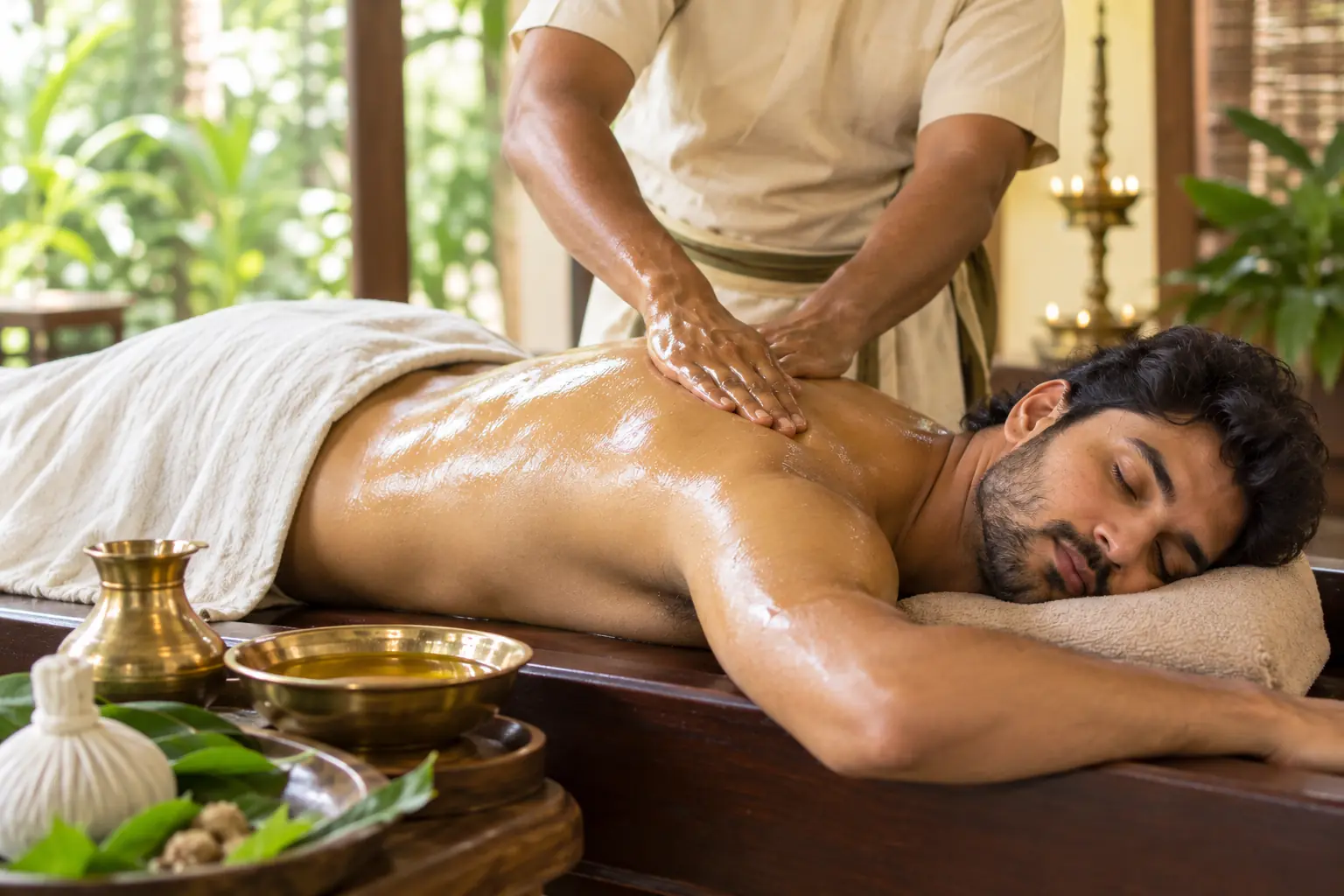
Abhyanga
Abhyanga is an Ayurvedic massage practice involving the application of oil and manual massage.
At a service level, its proposed purpose may include relaxation, comfort and support for movement. It should not be described as restoring damaged cartilage or replacing the body’s synovial fluid.
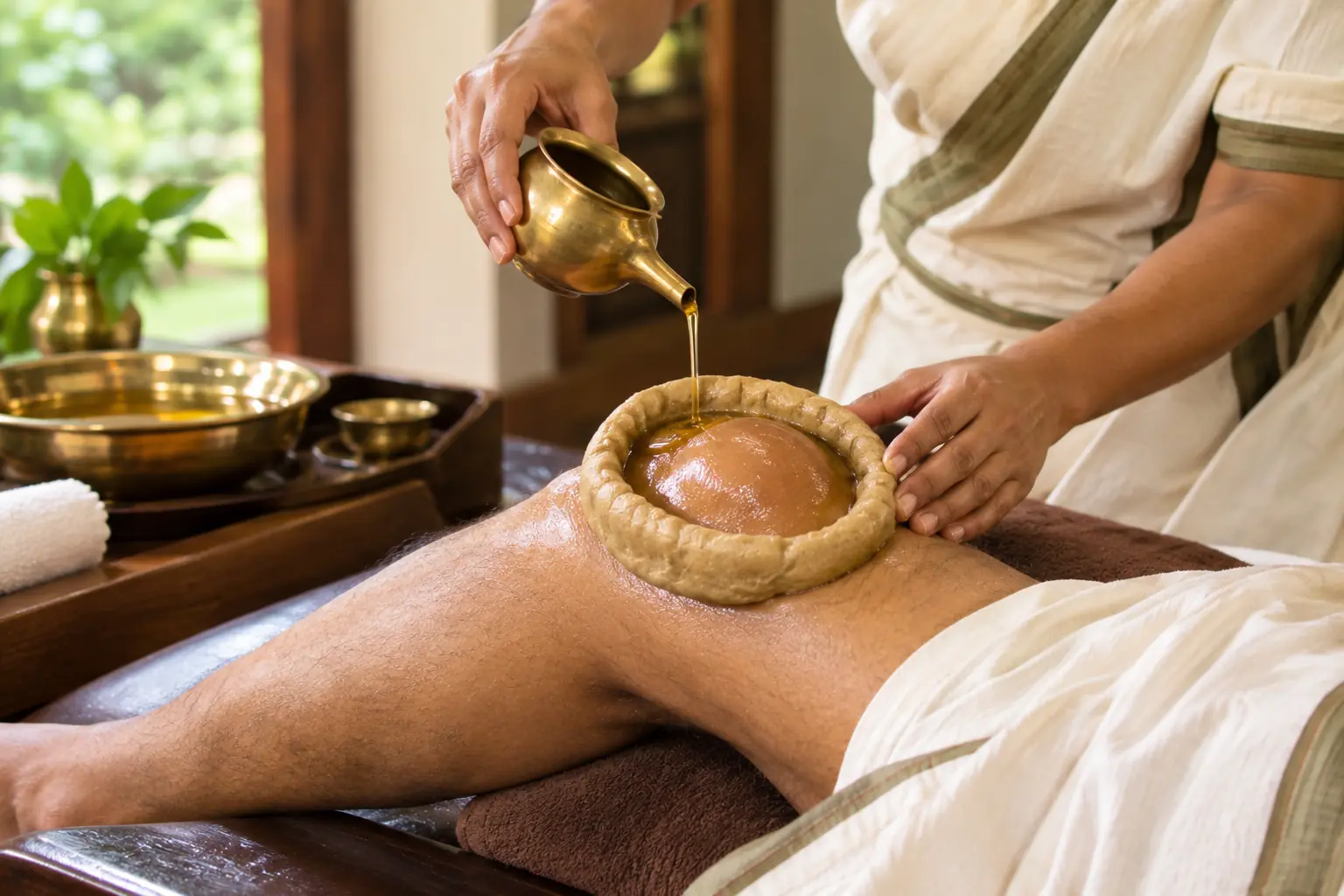
Janu Basti
Janu Basti involves creating a temporary boundary around the knee and applying warm medicated oil within that area.
It is traditionally used in Ayurveda as a local therapy for knee discomfort and stiffness.
The procedure should be understood as an external therapeutic practice. Applying oil to the skin should not be represented as proven restoration of internal joint lubrication or repair of damaged cartilage.
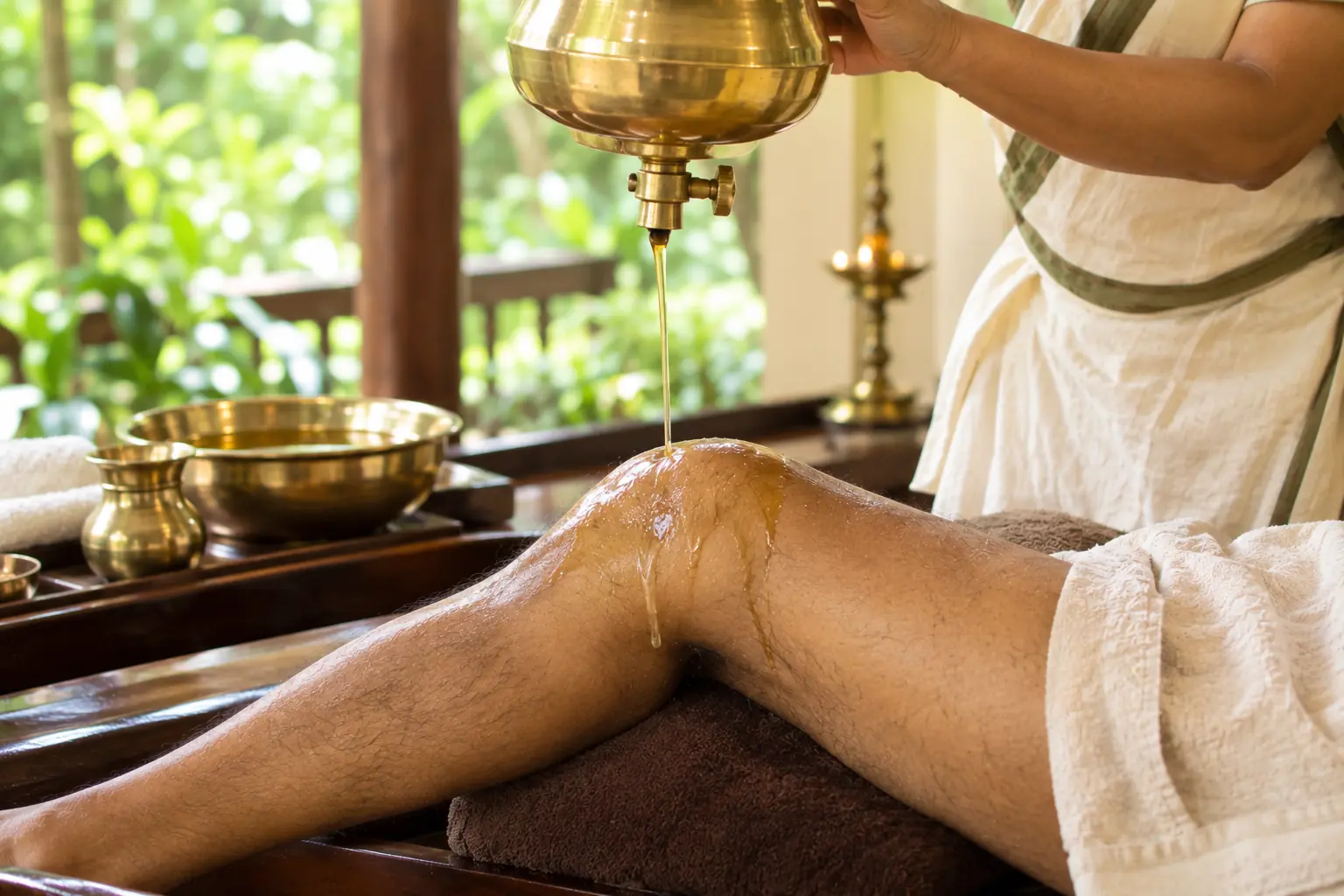
Janu Dhara
Janu Dhara involves directing a controlled stream of warm oil or another prescribed liquid over the knee region.
The procedure may be selected as part of an individualized Ayurvedic programme where considered appropriate.
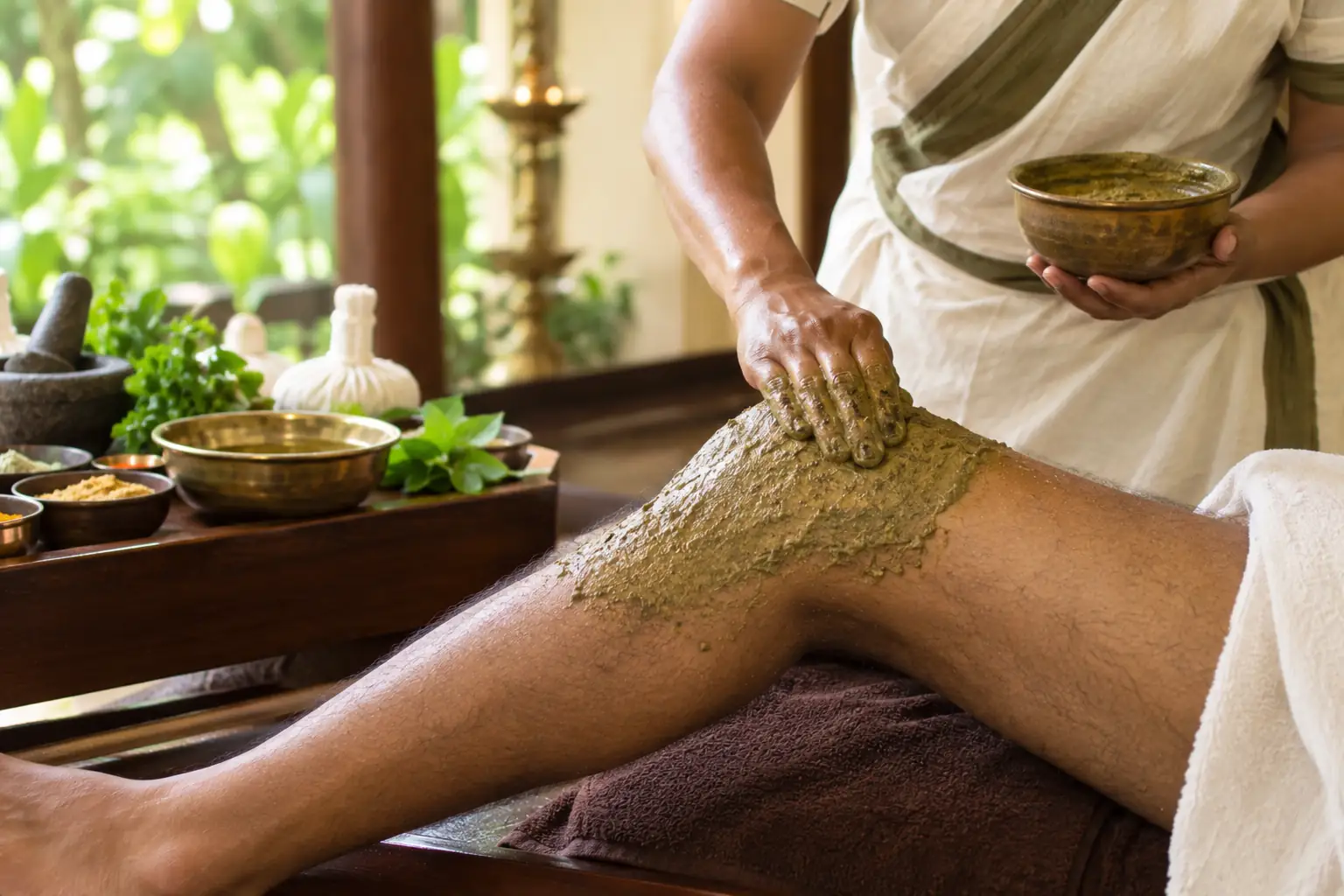
Lepa
Lepa involves applying a prepared Ayurvedic herbal paste to an area of the body.
The ingredients and duration of application depend on the practitioner’s assessment. Skin sensitivity and other individual factors should be considered.
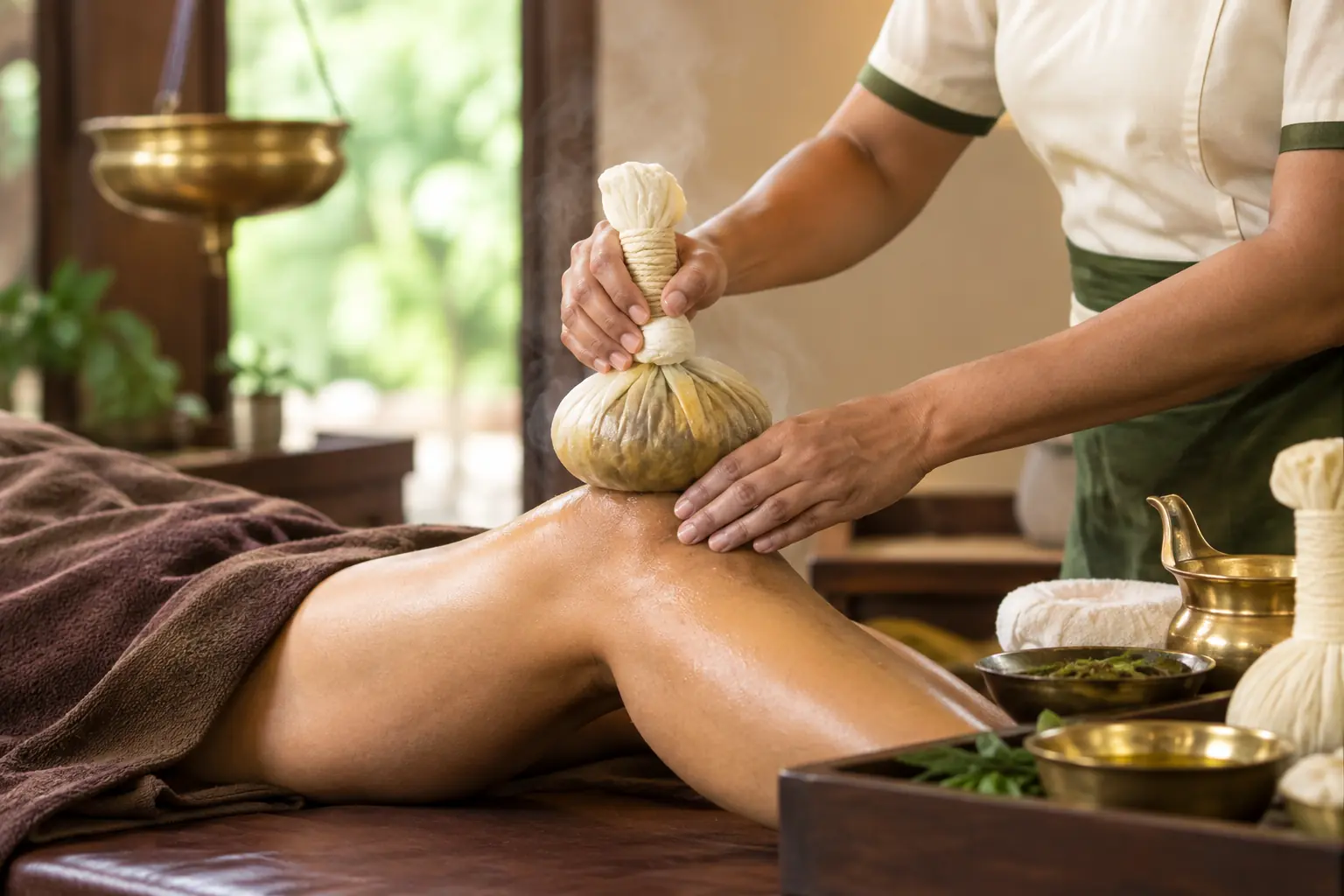
Swedana and Other Therapeutic Procedures
Certain forms of Ayurvedic fomentation or heat-based therapy may be recommended alongside other treatments.
These procedures are selected according to the person’s condition rather than automatically included in every knee-pain programme.
What About Ayurvedic Medicines?
Ayurvedic treatment may sometimes include internally administered preparations. These should be prescribed and supervised by a qualified practitioner rather than selected independently.
This is particularly important if you take prescription medicines, have chronic health conditions, are pregnant or breastfeeding, or are preparing for surgery.
Evidence and safety vary considerably between Ayurvedic preparations. NCCIH notes that some studies suggest potential improvements in pain and function in knee osteoarthritis, but the available research is limited and many studies are small or have methodological limitations.
Some Ayurvedic preparations have also been found to contain potentially toxic metals, including lead, mercury or arsenic. Therefore, “natural” should not automatically be interpreted as “risk-free.”
Do not stop, reduce or replace prescribed medicines because you are receiving Ayurvedic care.
What Are the Possible Goals of Treatment?
Treatment goals should be realistic and discussed during consultation.
Depending on the individual situation, the programme may aim to support:
✔ Reduction in the experience of pain
✔ Improved comfort during movement
✔ Reduced stiffness
✔ Better tolerance of everyday activities
✔ Support for mobility
✔ Relaxation and general wellbeing
✔ Development of appropriate lifestyle habits
These are treatment goals, not guarantees.
The response to Ayurvedic treatment can vary depending on the underlying condition, its severity, duration, other health factors and previous treatment.
What Does the Evidence Say About Ayurveda for Knee Pain?
Research into Ayurveda and knee osteoarthritis is still developing.
NCCIH reports that a few studies have suggested that Ayurvedic preparations may reduce pain and improve function in people with osteoarthritis. However, it also states that many trials are small or not well designed, meaning stronger evidence is needed before broad conclusions can be made.
Therefore, this page does not claim that Ayurvedic treatment:
- Regenerates damaged cartilage
- Rebuilds a damaged joint
- Restores internal joint lubrication
- Prevents the need for surgery
- Guarantees pain relief
- Works equally well for every person
When May Complementary Ayurvedic Care Not Be Appropriate?
Ayurvedic care may need to be postponed or modified when a person requires urgent investigation or specialist treatment.
Extra caution is appropriate when there is:
- Severe or rapidly worsening pain
- Major swelling
- A visibly deformed knee
- Inability to bear weight
- A recent significant injury
- A hot, red knee with fever
- Suspected infection
- A suspected fracture or major ligament injury
- A condition requiring urgent specialist assessment
NHS guidance specifically recommends urgent assessment for severe knee pain, inability to move or bear weight, major swelling or deformity, and a hot/red knee accompanied by fever or feeling unwell.
Complementary treatment should never be used as a reason to postpone recommended medical care.
What Can You Bring to Your Consultation?
If you are visiting Dheemahi for knee-pain care, it is useful to bring:
- Previous medical reports
- X-ray or MRI reports, if available
- Current prescription details
- A list of supplements or Ayurvedic products you use
- Details of previous knee treatments
- Relevant information about previous injuries
- Any known allergies or medication reactions
This information can help the doctor understand your situation more completely.
Follow-Up and Progress Assessment
Knee pain management should not end with the first treatment session.
During follow-up, the doctor may review:
✔ Pain levels
✔ Response to individual therapies
✔ Stiffness
✔ Changes in medication or medical advice
✔ Mobility
✔ Ability to perform everyday activities
A treatment plan can be adjusted when the response is different from what was expected.
If symptoms worsen or new warning signs appear, seek appropriate medical assessment rather than simply continuing the same programme.
Why Choose a Doctor-Led Approach at Dheemahi?
At Dheemahi Ayurvedic Village in Kumarakom, the service begins with consultation and discussion of the individual’s health concerns.
The centre describes its booking process as:
Consultation Form
Share your health concerns and preferred time for discussion.
Discussion with the Doctor
Discuss your condition, expectations and treatment considerations with the doctor.
Treatment Planning
The doctor determines whether an Ayurvedic programme is appropriate and what type of care may be considered.
This approach is preferable to selecting a therapy based only on a symptom or keyword.
Ayurvedic Knee Pain Treatment in Kumarakom, Kerala
Dheemahi Ayurvedic Village is located in Kumarakom, Kerala, where visitors can combine doctor-led Ayurvedic care with a structured wellness environment.
The focus should remain on appropriate assessment, individualized treatment planning, safety and realistic expectations.
If you are considering Ayurvedic treatment for knee pain, the most useful first step is to discuss your symptoms and medical history with a qualified practitioner.
Related Ayurvedic Services
Explore related services based on your health concerns:
Medical Disclaimer
This page provides general information about Ayurvedic care for knee pain and is not a diagnosis or a substitute for individual medical advice. Ayurvedic therapies may not be suitable for every person or every cause of knee pain. Seek appropriate medical assessment for severe, sudden or unexplained symptoms. Do not stop or change prescribed medicines without consulting the healthcare professional responsible for your care.
Medically Reviewed By
Dr. Suraj S
Ayurvedic Physician | Dheemahi Ayurvedic Village
This page has been medically reviewed to ensure that the information on Ayurvedic Treatment for Knee Pain
Medical Review: Ayurvedic Treatment for Knee Pain in Kerala
Reviewed On: 14 September 2026

Frequently Asked Questions
Is Ayurvedic treatment suitable for everyone with knee pain?
No. Knee pain has many possible causes, and suitability depends on the person’s diagnosis, symptoms, health history and current treatment. A doctor-led assessment should come before selecting therapies.
Can Ayurveda cure knee osteoarthritis?
Ayurvedic treatment should not be presented as a cure for osteoarthritis. Osteoarthritis is a chronic condition for which treatment generally focuses on managing symptoms and maintaining function. Complementary approaches may be considered alongside appropriate medical care.
Can Ayurvedic oil restore knee joint lubrication?
There is not sufficient evidence to claim that applying oil externally restores the internal synovial fluid or repairs damaged joint structures. External oil therapies may be used as traditional Ayurvedic procedures for comfort and mobility, but they should not be described as structural repair.
Can I continue my regular medicines during Ayurvedic treatment?
Do not stop or change prescription medicines without advice from the healthcare professional who prescribed them. Tell the Ayurvedic doctor about all medicines and supplements you use so potential interactions and safety issues can be considered.
Will I need an X-ray or MRI?
That depends on the suspected cause of the knee pain. Some knee problems require imaging or specialist assessment, while others may not. If previous investigations have been performed, bring the reports to your consultation.
Can Ayurvedic treatment prevent knee surgery?
No treatment should be promoted as guaranteeing avoidance of surgery. Some knee conditions require specialist treatment, and complementary care should not delay a recommended surgical or orthopaedic assessment.
How long does Ayurvedic knee-pain treatment take?
There is no universal treatment duration. The appropriate duration depends on the person’s condition, treatment goals, response and doctor’s assessment.
What should I do if my knee becomes very swollen or hot?
Seek prompt medical assessment, particularly if the knee is hot or red, you have fever or feel unwell, the pain is severe, or you cannot put weight on the knee.
How Our Booking Process Works
The unique approach involves a series of discussion during your initial decision-making process to make sure that we will be able to match your expectations with our treatment.
Based on the discussions with you our team of expert doctors will design the best treatment package personalized for your needs.
01
Consultation Form
Fill out our consultation form, and let us know when will you be available for our doctor to talk to you
02
Discussion with Doctor
Discuss your health condition and expectations with our doctor.
03
Booking Confirmation
Confirm the booking by making a payment of 50% advance.
Consultation Form
Submit this form to initiate a booking with us
Have any queries? We will help you. Talk to us now
Say Goodbye to Health Woes & Hello to Healthy Living
Dheemahi Ayurvedic Pvt Ltd
12/386 Varaputhara Road
Kumarakom, Kerala, India
Pin 686563
Dheemahi Ayurvedic Centre, Near Neelimangalam Bridge, Kumaranaloor, Perumbaikad.P.O, Kottayam, Kerala, India, Pin 686016
Other Treatments
Karkidaka Chikilsa | Ayurvedic Treatment for Depression | How to Reduce Stress Naturally | Autoimmune Disorders | Weight-Loss Treatment | Frozen Shoulder Ayurvedic Treatment | Diabetes Ayurvedic Treatment | PCOS Ayurvedic Treatment | Celiac Disease Treatment | ayurvedic treatment for skin diseases | nervous system ayurvedic treatment | Back Pain Ayurvedic Treatment | Cervical Spondylitis Ayurvedic Treatment | ayurvedic treatment for blood sugar | Fatty Liver Ayurvedic Treatment | Knee Pain Ayurvedic Treatment | Migraine Ayurvedic Treatment | Osteoarthritis Ayurvedic Treatment | Psoriasis Ayurvedic Treatment | Sinusitis Ayurvedic Treatment | Ayurvedic Detox Treatment | Migraine Ayurvedic Treatment | Ayurvedic Treatment for Rheumatoid Arthritis | Ayurvedic treatment for joint pain | Ayurvedic treatment for ulcerative colitis | Panchakarma Treatment |