
Back Pain Ayurvedic Treatment in Kerala
The Best Back Pain Ayurvedic Treatment in Kerala
Experience effective relief with Back Pain Ayurvedic Treatment in Kerala at Dheemahi Ayurveda. Back pain is a common ailment that can significantly impact daily life, often stemming from factors such as poor posture, sedentary lifestyles, or muscle tension.
At Dheemahi Ayurveda, we offer personalized Ayurvedic treatments tailored to address the root cause of back pain. Our therapies incorporate natural remedies such as herbal medicines and massage techniques to alleviate discomfort and promote healing.
With a focus on holistic well-being, our expert doctors provide comprehensive care to ensure long-lasting relief from back pain. Trust Dheemahi Ayurveda for personalized and effective Back Pain Ayurvedic Treatment in Kerala.
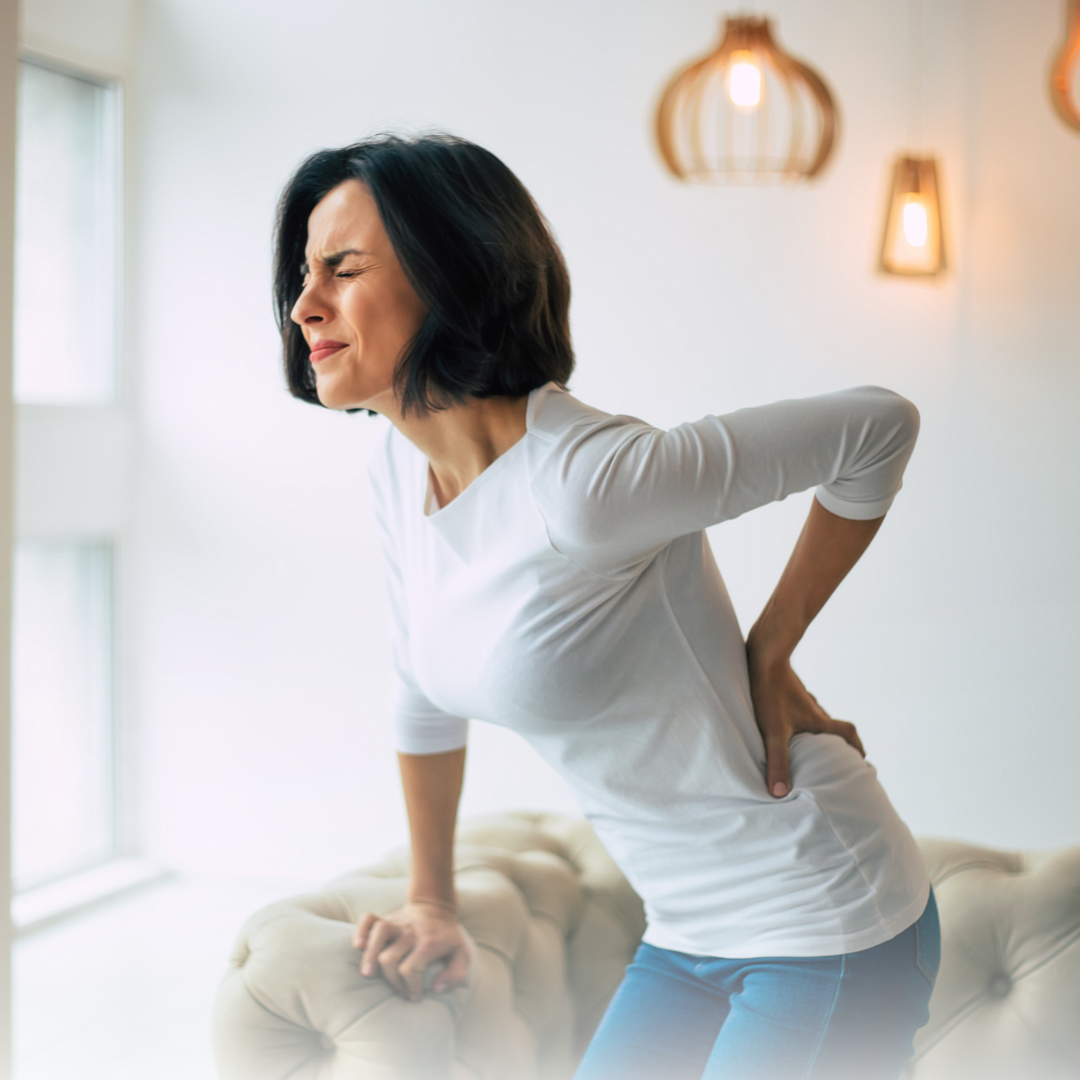
Back Pain Ayurvedic Treatment in Kerala
In Ayurveda, the management of back pain involves two main approaches: Shamana Chikitsa (conservative management) and Shodhana Chikitsa (purification treatment).
Shamana Chikitsa (Conservative Management):
This approach focuses on improving digestion and metabolism to address the root causes of back pain. It includes the use of various Ayurvedic formulations tailored to each patient’s specific condition:
- Kashaya (Decoction): Herbal decoctions are prepared by boiling coarse powders or dried medicinal herbs to create a therapeutic liquid.
- Asava and Arishta (Fermented Preparations): Medicinal herbs are mixed with water and fermented for a specific duration, either with or without boiling. These fermented preparations are known for their digestive and therapeutic properties.
- Gulika (Tablets): Ayurvedic tablets are made by rolling medicinal pastes into balls and then drying them.
- Choornam (Powder): Medicinal herbs are dried, cleaned, and ground into a fine powder, which is used in various treatments.
- Ghrita (Medicated Ghee): Ghee is processed with specific medicinal herbs suitable for the treatment to create medicated ghee, which is used internally.
External body treatment
- Abhyangam: Abhyangam is a full-body massage using Ayurvedic oils. It helps relieve pain and joint aches by improving blood circulation and nourishing the muscles and joints. The application of warm oil can also have a soothing effect on the nervous system.
- Kati Basti: Kati Basti involves the application of warm herbal oil on the lower back area, which is then held in place using a dough dam. This treatment is particularly beneficial for conditions like lumbar spondylosis, disc prolapse, lumbago, and sciatica as it helps in reducing inflammation and promoting healing in the lower back region.
- Pizhichil: Pizhichil is a unique therapy where warm medicated oil is continuously poured and massaged onto the patient’s body using a cloth dipped in oil. It’s known for improving muscle tone, strengthening the body, and providing support. It’s often used for various musculoskeletal issues.
- Njavara Kizhi.Njavara Kizhi is particularly beneficial for degeneration-related issues in cervical spondylosis. It nourishes the tissues, improves circulation, and provides relief from pain and stiffness
- Greeva Basti: Medicated lukewarm oil is applied and held over the affected part(cervical spine area)to restore lubrication, protect against age-related changes, boost blood circulation, and enhance knee joint mobility.
- Lepa: Application of medicated paste on the joint, left for several hours. Lepam therapy can provide localized relief by reducing pain and inflammation in the cervical region
- Pichu: It involves the application of a piece of sterile cotton pad soaked in warm medicated oil to the affected part. The warm oil is allowed to soak into the tissues, which can help alleviate pain, reduce stiffness, and promote relaxation.
- Agni Karma: Agni Karma involves applying heat to painful joint areas using a special instrument. It improves blood flow and provides relief from pain.
Shodhana Chikitsa (Purification Treatment):
This approach involves purification therapies, including Panchakarma treatments, to effectively treat low back pain. Panchakarma therapies are aimed at cleansing the body and balancing doshas.
- Virechana (Purgation): A purgation treatment aimed at eliminating excess pitta dosha. Medications are orally administered to induce multiple bowel movements, expelling toxins and waste.
- Vasti (Enema): Enema therapy is considered a prime treatment among Panchakarma. It involves administering herbal preparations through the anal route and is of different types, including
- Sneha Basti: Sneha Basti is an enema therapy that uses medicated oil. It is employed for various purposes, including the treatment of lower backache, gout, and rheumatism. The medicated oil is introduced into the colon, helping to alleviate these conditions.
- Kashaya Basti: Kashaya Basti is similar to Sneha Basti, but instead of oil, it involves the use of medicated decoction for the enema. It can also be used to treat lower back pain, gout, and rheumatism, as the herbal decoction can have anti-inflammatory and analgesic effects.
Ayurvedic treatment is highly individualized and varies from person to person. This personalized approach is one of the core principles of Ayurveda and is based on the recognition that each individual is unique, with their own constitution (Prakriti), current imbalances (Vikriti), and specific health concerns.
What couses Back Pain
Back pain is a sensation of discomfort or pain felt in the back of the body. It can be categorized into different types based on the affected area:
- Neck pain (Cervical): This type of pain is felt in the neck region.
- Middle back pain (Thoracic): Pain is located in the middle of the back.
- Lower back pain (Lumbar): This is the most common type, affecting the lower part of the back, between the bottom of the ribs and the buttocks. It’s often referred to as Lumbago.
- Tailbone pain (Sacral): Pain is centered around the tailbone area.
Low back pain, specifically, affects the lower region of the spine, which is the area between the lower edge of the ribcage and the buttocks. It’s a widespread issue that can occur for various reasons, including Poor sleep posture, Stress, Straining, twisting, or bending the back, and Trauma to muscles, tendons, and ligaments, often from lifting heavy objects or accidents
In many cases, low back pain is triggered by movements that involve lifting heavy objects, twisting, or bending the back improperly. Ignoring the initial signs of discomfort can lead to a worsening of the condition. Low back pain may or may not restrict certain movements, such as bending, sitting, or getting up. Sometimes, it can radiate down the legs, leading to a condition known as sciatica, which is associated with pain and discomfort in the legs.
The nature of back pain can vary from person to person. It can be constant or intermittent, and the pain can be localized to a specific spot or spread to other areas of the back. The sensation of pain can also range from a diffuse, dull ache to a sharp, piercing discomfort.
Theory and Ayurvedic view on Back pain Ayurvedic Treatment in Kerala
In Ayurveda, back pain is often correlated with imbalances in the doshas (Vata, Pitta, and Kapha) and can manifest in different ways based on these imbalances. Here are some Ayurvedic correlations for the types of back pain you mentioned:
- Sandhigata Vata: This condition relates to joint pain and stiffness. It is primarily attributed to an aggravated Vata dosha.
- Greevagraham: Greevagraham, or stiffness in the back of the neck leading to restricted neck movements, is also associated with Vata imbalance.
- Greevashoolam: Pain in the upper back region, including the upper spine and shoulders, is often related to both Vata and Kapha imbalances.
- Katigraham: Stiffness and difficulty moving in the waist or lower back area can be correlated with Vata aggravation.
- Katishoolam: This refers to pain in the lower back region and is also associated with Vata imbalance.
- Gridhrasi: Gridhrasi, which includes low back pain, pinning sensations, and numbness radiating to the legs (similar to sciatica), is often attributed to Vata imbalance.
PATHOGENESIS ( SAMPRAPTI )
Consumption of Etiological Factors:
Back pain can be triggered by various etiological factors, including poor posture, improper lifting techniques, trauma, excessive physical exertion, or even psychological stress. These factors are believed to play a role in the development of back pain.
Aggravation of Doshas, Mainly Vata Dosha
The aggravation of Vata dosha is a crucial step in the pathogenesis of back pain. Vata is responsible for the movement and communication of nerve impulses in the body. When Vata becomes aggravated, it can lead to imbalances in the musculoskeletal system and result in pain and discomfort, especially in the lower back.
Vitiation of Other Doshas:
The aggravated Vata dosha can provoke Pitta and Kapha doshas, leading to a further imbalance. This can contribute to the spread of pain and discomfort to different parts of the body, including the back.
Obstruction of Srothas (Channels):
The aggravated doshas, particularly Vata, can obstruct the Srothas, which are the channels or pathways responsible for the flow of nutrients, fluids, and energy throughout the body. When these channels become blocked, it can disrupt the circulation of vital substances and create an environment conducive to the development of back pain. The imbalanced doshas can also lead to the drying up of bodily tissues. This can affect the flexibility and lubrication of the joints and muscles, making them more prone to injury and pain.
Manifestation of Various Diseases: BACK PAIN
As a result of the above processes, various diseases can manifest in the body, including those that affect the musculoskeletal system, leading to back pain.
Causes Back pain – Ayurvedic Treatment in Kerala
In Ayurveda, the causes or Nidana of back pain are often attributed to various lifestyle factors and underlying health conditions.
Excessive Intake of Cold, Dry, Light Foods: Consuming an excessive amount of foods that are cold, dry, and light in nature can disturb the balance of Vata dosha in the body. Vata imbalance is often associated with musculoskeletal issues, including back pain.
Excessive Sexual Indulgence and Exercises: Overindulgence in sexual activities or vigorous exercises without proper warm-up and cool-down routines can strain the muscles and joints of the back, leading to pain and discomfort.
Lack of Sleep: Inadequate or poor-quality sleep can disrupt the body’s natural healing and repair processes. Chronic sleep deprivation can contribute to musculoskeletal issues, including back pain.
Muscle or Ligament Injuries or Spasms: Physical injuries, such as muscle strains or ligament sprains, can directly cause back pain. Additionally, muscle spasms in the back can lead to acute pain.
Underlying Inflammatory Diseases: Conditions like Ankylosing spondylitis, Arthritis, and other inflammatory disorders can affect the spine and cause chronic back pain. These conditions often involve inflammation of the joints and surrounding tissues.
Infectious Conditions: Infections, such as urinary tract infections or abscesses, can sometimes lead to referred pain in the lower back or pelvic region, contributing to back pain.
Obesity or Sudden Weight Gain: Excess body weight, especially around the abdomen, can put added strain on the lower back and spine, leading to back pain. Sudden weight gain can exacerbate this issue.
Symptoms of Back pain – Ayurvedic Treatment in Kerala
The signs and symptoms of back pain (Lakshana) can vary in intensity and presentation from person to person. Here are some common signs and symptoms associated with back pain:
- Increasing Pain with Lifting and Bending: This is due to added stress on the back muscles and spine.
- Worsening Pain When Resting, Sitting, or Standing: Changes in posture and pressure on the spine can exacerbate the discomfort.
- Back Pain That Comes and Goes: These fluctuations in pain may be related to various factors, including physical activity and rest.
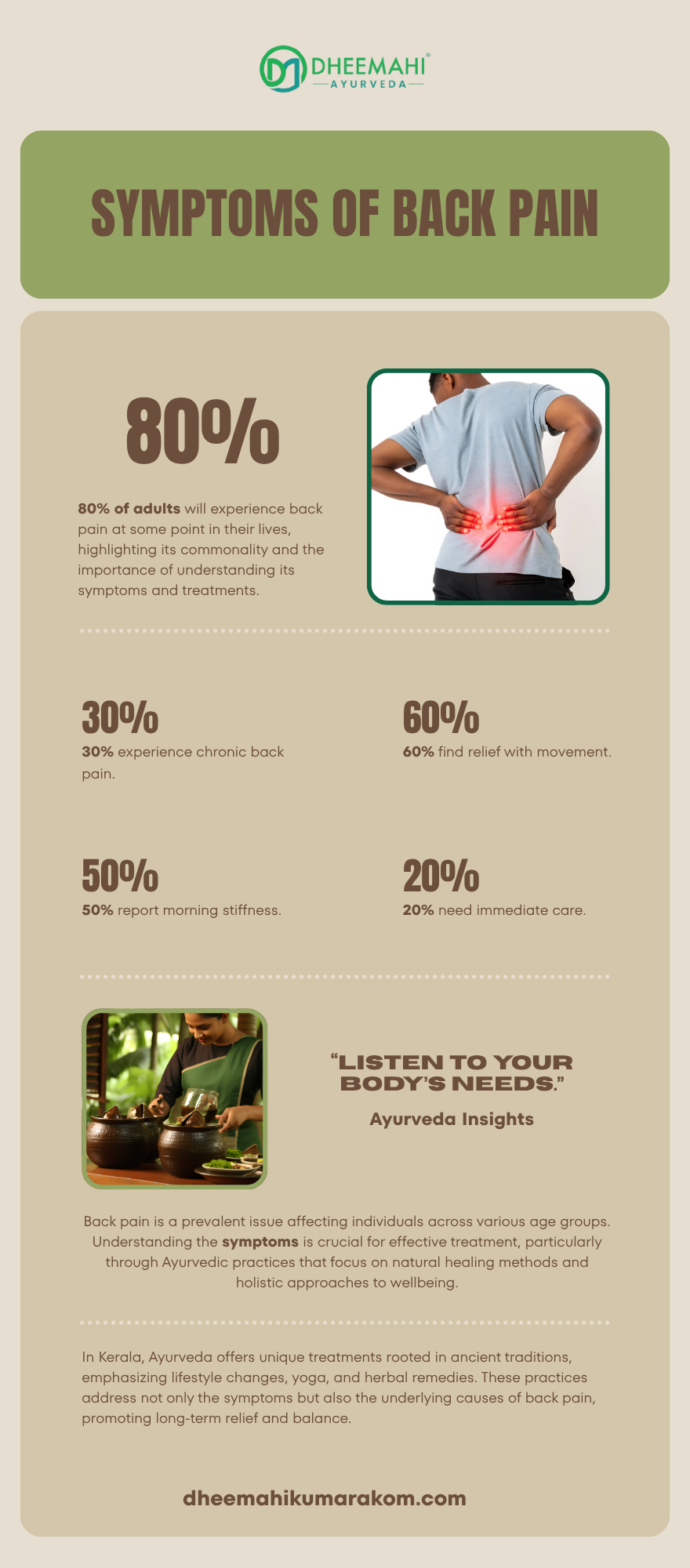
- Stiffness in the Morning When Awakening: Many individuals with back pain experience stiffness in the morning, particularly upon waking. This stiffness can gradually improve with movement and activity throughout the day.
- Lessened Back Pain with Activity: Engaging in gentle physical activity and movement can sometimes alleviate back pain.
- Pain That Radiates Away: Back pain can radiate to other areas of the body. For example, it may travel into the buttocks, down the leg, or even into the hip. This radiation of pain is often associated with conditions like sciatica.
- Numbness or Weakness in Legs or Feet: In more severe cases, back pain can be accompanied by numbness or weakness in the legs or feet. This may indicate compression of spinal nerves and requires prompt medical attention.
Cure Prespective of Back pain Ayurvedic Treatment in Kerala
It’s essential to remember that while many people with back pain experience relief and improved function, not all cases can be completely cured. The goal of treatment is often to manage symptoms, improve quality of life, and prevent further complications or disability. Prognosis can also be influenced by factors like age, overall health, and the presence of other medical conditions. If you’re experiencing back pain, consult a healthcare professional for an accurate diagnosis and a personalized treatment plan.
Can Ayurveda Help Relieve Psoriatic Arthritis Back Pain Naturally?
Some people with psoriasis develop psoriatic arthritis (PsA), and when the inflammation affects the spine or sacroiliac joints, it leads to axial Psoriatic Arthritis — a major cause of deep, dull, inflammatory back pain.
Unlike mechanical pain, PsA pain often:
-
worsens in the morning
-
improves with gentle movement
-
comes with stiffness, fatigue, or recurring flares
Ayurvedic View
Ayurveda correlates PsA with:
-
Vata imbalance (pain, stiffness, dryness)
-
Pitta aggravation (inflammation, heat)
-
Rakta Dushti (vitiated blood affecting tissues)
How Dheemahi Approaches PsA-Related Back Pain
Our treatment focuses on reducing inflammation, calming aggravated doshas, and improving joint function:
-
Shamana therapies to reduce systemic inflammation
-
Lepana, localized Abhyanga, Kati Basti to ease stiffness
-
Pizhichil and Njavara Kizhi to nourish degenerating tissues
-
Internal herbs selected after doctor evaluation (no generalized prescriptions)
-
Diet correction to reduce inflammatory load
-
Lifestyle recommendations to manage stress and avoid triggers
When to Seek Immediate Care
If pain is accompanied by severe stiffness, fever, sudden swelling, or neurological symptoms, a joint evaluation is essential. Dheemahi integrates Ayurveda with modern assessments whenever needed.
How Can Ayurveda Safely Ease Lower Back Pain During Pregnancy?
Pregnancy naturally shifts physiology:
-
Relaxin hormone softens ligaments → instability
-
Weight gain increases lumbar load
-
Postural changes strain muscles
-
Emotional stress amplifies discomfort
Ayurveda notes that all three doshas shift during pregnancy, but Vata becomes particularly sensitive. Balanced Vata = smoother pregnancy.
Ayurvedic Pregnancy-Safe Care at Dheemahi
Our treatments are gentle, supervised, and adapted trimester-wise:
-
Prenatal Abhyanga
Warm, mild oil application to relax tense muscles, improve sleep, and support circulation. -
Localized warm therapies (mild only)
To relieve sacral/lumbar strain. -
Breathwork & posture training
To stabilize pelvic alignment and reduce fatigue. -
Sleep guidance & ergonomic corrections
No aggressive therapies, panchakarma, heat treatments, or internal medicines are used without obstetric clearance.
Common Pregnancy Back Pain Causes We Address
-
Ligament laxity
-
Poor posture
-
Standing/sitting for long hours
-
Stress-related tightening
-
Muscular imbalance
When to Seek Immediate Medical Attention
-
Severe back pain with cramping
-
Vaginal bleeding
-
Fever
-
Sudden swelling or numbness
Pregnancy is a sacred period, and Ayurvedic care at Dheemahi focuses on safety, comfort, and emotional well-being.
What Is the Best Ayurvedic Approach for Fast Back Muscle Pain Relief?
Muscle strain is one of the most frequent causes of acute back pain. It often occurs due to:
-
improper lifting
-
sudden twisting
-
prolonged sitting
-
poor posture
-
overexertion
It presents as sharp, localized pain, stiffness, or difficulty bending.
Immediate Relief (Evidence-Based + Ayurveda-Informed)
-
First 48 hours: gentle rest + cold compress to reduce inflammation
-
After 48–72 hours: warm compress or mild heat to relax muscles
-
Gentle stretching: Cat-Cow, pelvic tilts, and mild spinal mobility
-
Avoid lying in bed all day — light movement speeds recovery
Ayurvedic Therapies at Dheemahi for Muscle Strain
-
Abhyanga
Relaxes contracted muscle fibers and improves circulation. -
Kati Basti
Warm oil retention that deeply relaxes localized spasms. -
Pizhichil
Helps in muscular fatigue and chronic tightness. -
Lepana
Anti-inflammatory herbal paste for acute flare-ups. -
Fomentation therapies (Swedana)
Ideal once acute inflammation settles.
Strengthening for Long-Term Recovery
Doctors at Dheemahi guide:
-
core-strengthening
-
posture corrections
-
workstation ergonomics
-
supportive routines (diet, sleep, stress reduction)
Red Flags (Seek medical attention immediately)
-
Radiating pain down the leg
-
Numbness or weakness
-
Bladder/bowel issues
-
Pain not improving for 2–3 weeks
Low Back Pain in Youngsters and Children
In children, back problems usually arise from factors like sports injuries, falls, playtime accidents, or strain, often due to heavy backpacks. Back pain and stiffness in kids often result from minor injuries like pulled muscles, strained ligaments, or bruises. Thankfully, these issues typically resolve on their own within a week, without requiring specific medical treatment. It’s crucial to watch a child’s condition and seek medical help if pain persists or worsens, or if concerning symptoms emerge
It’s important to be aware of “Red Flag” symptoms that may indicate a potentially serious issue and immediate medical attention should be sought if any of these symptoms are present:
- Fever or Chills: The presence of fever or chills alongside back pain could be a sign of an underlying infection.
- Unexplained Weight Loss: Significant, unexplained weight loss can be a concerning symptom and should be evaluated by a healthcare provider.
- Night Sweats: Night sweats, especially if they occur along with other symptoms, may warrant further investigation.
- Night Pain or Pain at Rest: Back pain that persists at night or while at rest could be indicative of a more serious problem.
- Saddle Anesthesia: Loss of sensation in the buttocks and inner thighs, known as saddle anesthesia, is a potential neurological symptom that requires immediate medical attention.
- Weakness, Numbness, or Painful Leg Muscles: These symptoms could suggest nerve-related issues and should be evaluated by a healthcare professional.
Recommended Yoga Poses for Back pain
Yoga offers more than just a quick fix; it provides lasting benefits when practiced consistently. Even beginners can experience immediate relief through simple stretches.
The physical aspects of yoga, encompassing postures and breathing exercises, are believed to enhance the body’s functionality and alleviate back pain. The mental facets, such as meditation and relaxation, contribute to a sense of tranquility and well-being, which can reduce stress and tension – common contributors to back pain. Through regular practice, yoga offers not only short-term relief but also the potential for long-term improvements in both physical and mental health.
- Chakravakasana (Cat-Cow Stretch):
This pose involves alternating between a rounded and an arched spine. It’s often used in warm-up sequences and for lower back pain relief.
- Trikonasana (Extended Triangle):
Triangle Pose is a standing posture that stretches the legs, reduces stress, and enhances stability. It also aids digestion and can alleviate back pain through muscle stretching.
- Bhujangasana (Cobra Pose):
Cobra Pose helps increase spinal mobility and strengthens support muscles, making it beneficial for back pain relief.
- Makarasana (Crocodile Pose):
Crocodile Pose targets various parts of the back, particularly the lower back. It can provide relief for lower back pain.
- Dandasana (Staff Pose):
Staff Pose stretches leg muscles and enhances spinal awareness, making it a good warm-up pose and useful for back strength.

Back Ayurvedic Treatment at Dheemahi Ayurveda
At Dheemahi Ayurveda, we take pride in our team of expert doctors who prioritize your health and well-being. With a rich heritage spanning five generations, we offer authentic and traditional Ayurvedic treatments. Our commitment to your health includes regular follow-ups to address your concerns.For a comprehensive understanding of your condition, our daily consultations involve physical examinations, enabling our doctors to gather valuable insights. We recognize the importance of routine follow-up check-ups, especially for chronic diseases.
In cases requiring therapies to alleviate symptoms, our doctors provide essential supervision. Our Panchakarma therapies are meticulously supervised, and your treatment schedule is diligently documented. We understand the integral role of the mind in achieving a healthy life. The tranquil atmosphere of Dheemahi Ayurveda Village plays a significant role in the healing process. Our spacious garden and living rooms offer a serene environment to support your journey to well-being.
With our in-house pharmacy and medicine manufacturing unit, we provide authentic medicines that ensure effective treatment. Our team of professionals guides you toward a holistic state of health and vitality by offering personalized daily routines for diet and lifestyle.
Frequently Asked Questions
What should I expect during my first consultation for back pain at Dheemahi?
A detailed history, physical and Ayurvedic pulse exam (Nadi), posture and neurological screening. The doctor creates a personalized treatment plan (therapies, medicines, diet, yoga) and explains duration, expected outcomes and follow-up.
Are there side effects of Ayurvedic therapies for back pain?
When administered by experienced physicians and trained therapists, therapies are generally safe. Temporary reactions (mild tiredness, transient soreness) can occur during detox phases — these are monitored and managed by the medical team.
How quickly can I return to normal activity or exercise?
Short, gentle activity is encouraged early (walking, mobility drills). Return to heavier exercise is gradual and depends on response to therapy; doctors provide a stepwise plan to avoid relapse.
What is not included in the tariff and charged extra?
- Taxi pick-up from Kochi Airport: ₹3000/- for small cars (4-seater) and ₹4500/- for big cars (6-seater)
- Taxi pick-up from Kottayam railway station: ₹1400
- Boating to the lake
- Laundry: ₹150 per wash cycle (washing and drying only, no ironing)
- Medical investigations (blood tests, urine tests, ultrasonography, etc.) and associated transportation charges
- Aftercare medications to take home
- Any additional transportation needs
- Therapies outside the scope of the doctor’s advice
How should I prepare for Ayurvedic treatments?
Get Ready Mentally: Preparing your mindset is crucial for a profound and life-changing journey. Share any dietary needs or health concerns, and keep an open attitude
What is the daily program schedule?
Our daily routine may vary based on consultation decisions, but generally include:
- 6:30 AM: Yoga (replaced by therapy sessions on some days)
- 7:45 AM: Kashaya Pana (Herbal Medicines)
- 8:00 AM: Breakfast
- 9:30 AM – 12:30 PM: Therapy Sessions
- 12:45 PM: Lunch
- 2:30 PM: Therapy Sessions as per schedule
- Evening: Walk, cycling, or swimming pool
- 6:45 PM: Kashaya Pana (Herbal Medicines)
- 7:00 PM: Dinner
- Early to bed
What should I carry with me to the resort?
- Clothes: Casuals, light woolens, cotton tees, and trousers for yoga classes
- Medical: Past medical history records and prescriptions
- Books, etc.
What is your payment and cancellation policy?
If there are any changes to your plans, please inform us. We do not believe in a complicated cancellation policy. Although we previously had a policy for deducting an advance amount, we have never enforced it. If you are not satisfied with our care after arriving, you only need to pay for the services you have received.
How do I choose the right package?
Our doctors will select the best package to ensure you receive the most suitable treatment for your needs.
How do I book a stay?
- Step 1: Submit a consultation form
- Step 2: Discuss with the doctor
- Step 3: Confirm your booking
How Our Booking Process Works
The unique approach involves a series of discussion during your initial decision-making process to make sure that we will be able to match your expectations with our treatment.
Based on the discussions with you our team of expert doctors will design the best treatment package personalized for your needs.
01
Consultation Form
Fill out our consultation form, and let us know when will you be available for our doctor to talk to you
02
Discussion with Doctor
Discuss your health condition and expectations with our doctor.
03
Booking Confirmation
Confirm the booking by making a payment of 50% advance.
Consultation Form
Submit this form to initiate a booking with us
Have any queries? We will help you. Talk to us now
Say Goodbye to Health Woes & Hello to Healthy Living
Dheemahi Ayurvedic Pvt Ltd
12/386 Varaputhara Road
Kumarakom, Kerala, India
Pin 686563
Dheemahi Ayurvedic Centre, Near Neelimangalam Bridge, Kumaranaloor, Perumbaikad.P.O, Kottayam, Kerala, India, Pin 686016
Other Treatments
Karkidaka Chikilsa | Ayurvedic Treatment for Depression | How to Reduce Stress Naturally | Autoimmune Disorders | Mental Health Ayurvedic Treatment | Weight-Loss Treatment | Frozen Shoulder Ayurvedic Treatment | Diabetes Ayurvedic Treatment | PCOS Ayurvedic Treatment | Celiac Disease Treatment | ayurvedic treatment for skin diseases | nervous system ayurvedic treatment | Back Pain Ayurvedic Treatment | Cervical Spondylitis Ayurvedic Treatment | ayurvedic treatment for blood sugar | Fatty Liver Ayurvedic Treatment | Knee Pain Ayurvedic Treatment | Migraine Ayurvedic Treatment | Osteoarthritis Ayurvedic Treatment | Psoriasis Ayurvedic Treatment | Sinusitis Ayurvedic Treatment | Ayurvedic Detox Treatment | Migraine Ayurvedic Treatment | Ayurvedic Treatment for Rheumatoid Arthritis | Ayurvedic treatment for joint pain | Ayurvedic treatment for ulcerative colitis | Panchakarma Treatment |