
What Treatments May Be Included in an Ayurveda Retreat?
An Ayurveda retreat may include a combination of traditional therapies, Ayurvedic medicines, therapeutic routines, yoga, dietary guidance and lifestyle practices. However, there is no single treatment list that applies to every guest.
At a doctor-guided Ayurveda retreat, the programme may begin with a consultation and assessment of the individual’s health concerns, medical history, lifestyle, constitution and current symptoms. Based on that assessment, the Ayurvedic physician may recommend selected therapies rather than following the same treatment schedule for everyone.
Some guests may receive external therapies such as Abhyanga or Swedana, while others may be considered for procedures such as Shirodhara, Kizhi, Pizhichil or selected Panchakarma procedures. The suitability, sequence and frequency of these therapies should depend on the person’s individual circumstances.
At Dheemahi Ayurvedic Village in Kumarakom, treatment planning is therefore approached as an individualized process rather than a fixed list of procedures.
Quick Summary
| Treatment category | Examples that may be considered |
|---|---|
| Ayurvedic consultation | Health history, lifestyle and individual assessment |
| Oil-based therapies | Abhyanga, Shirodhara, Pizhichil |
| Heat and fomentation therapies | Swedana and selected Kizhi procedures |
| Cleansing procedures | Selected Panchakarma procedures when clinically appropriate |
| Localized therapies | Procedures selected for particular body areas |
| Supportive practices | Yoga, meditation, breathing practices and lifestyle guidance |
| Internal support | Ayurvedic medicines or dietary recommendations when prescribed |
The therapies listed above are examples, not a guaranteed treatment schedule. A physician should determine whether a particular procedure is suitable.
What Does an Ayurveda Retreat Treatment Programme Usually Involve?
An Ayurveda retreat is generally more than a collection of massage or spa treatments.
A medically oriented retreat may combine several components:
- Ayurvedic physician consultation
- Assessment of the person’s health concerns and treatment goals
- Individualised therapeutic procedures
- Ayurvedic medicines when prescribed
- Yoga and breathing practices
- Meditation or relaxation practices
- Lifestyle guidance
- Follow-up assessment during the stay
- Dietary recommendations
The exact combination can change according to the individual.
This distinction is important because two people staying at the same retreat may not receive identical therapies. A treatment that may be appropriate for one person may not be recommended for another because of differences in age, health history, medications, symptoms, physical condition or other factors.
The World Health Organization’s benchmarks for Ayurveda emphasize appropriate practice, practitioner competence, facilities, safety and quality considerations.
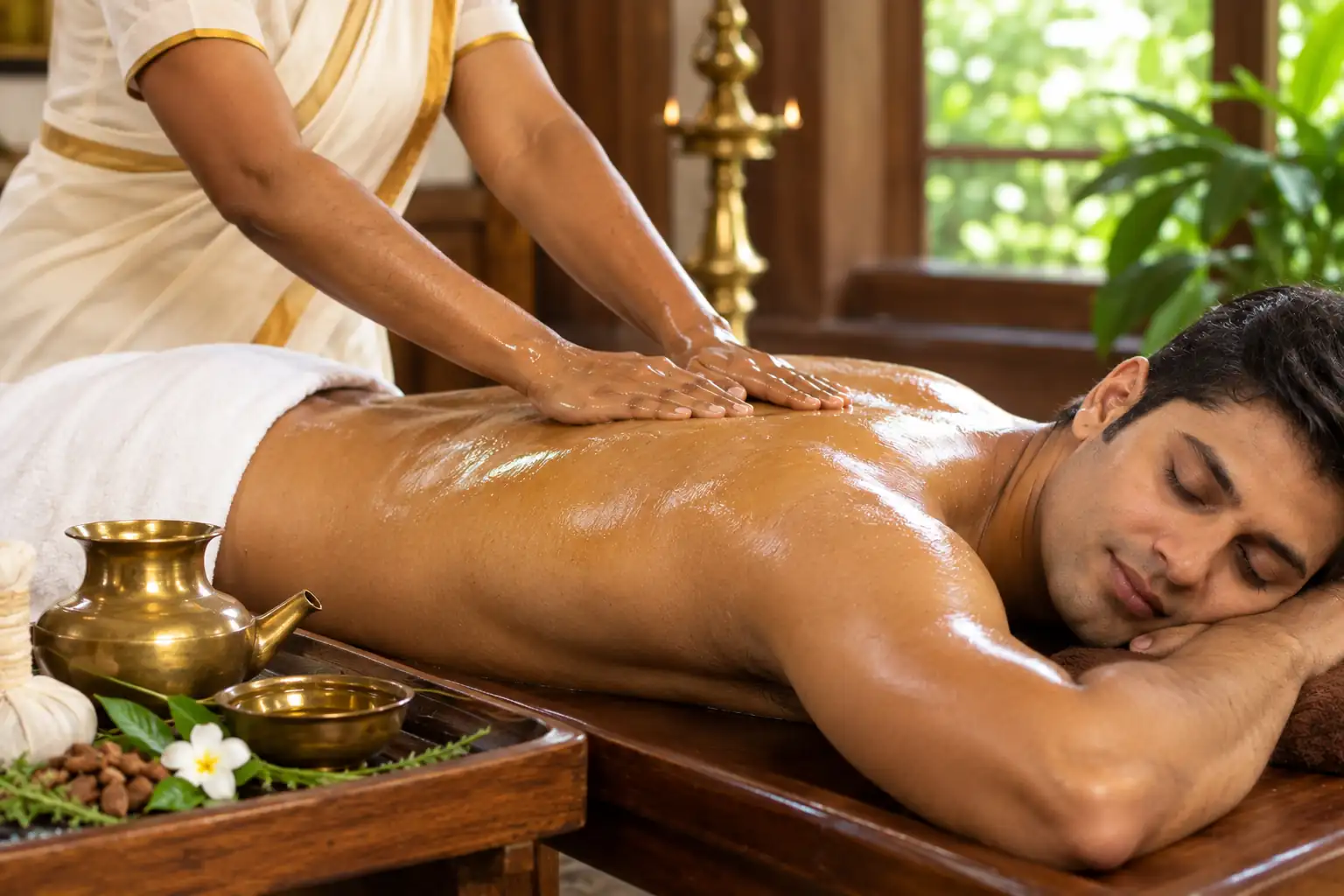
Abhyanga
Abhyanga is a traditional Ayurvedic oil-based therapy involving the application of oil with massage techniques.
It may be included as part of a retreat programme when the Ayurvedic physician considers it appropriate.
At a retreat, Abhyanga may be used as one component of a broader therapeutic plan rather than as a standalone treatment.
The type of oil, duration, technique and frequency may vary according to the individual’s needs.
What to expect
Depending on the programme, the procedure may involve:
- Application of selected oil
- Structured massage movements
- A defined treatment duration
- Rest following the procedure
- Additional therapy such as Swedana when clinically appropriate
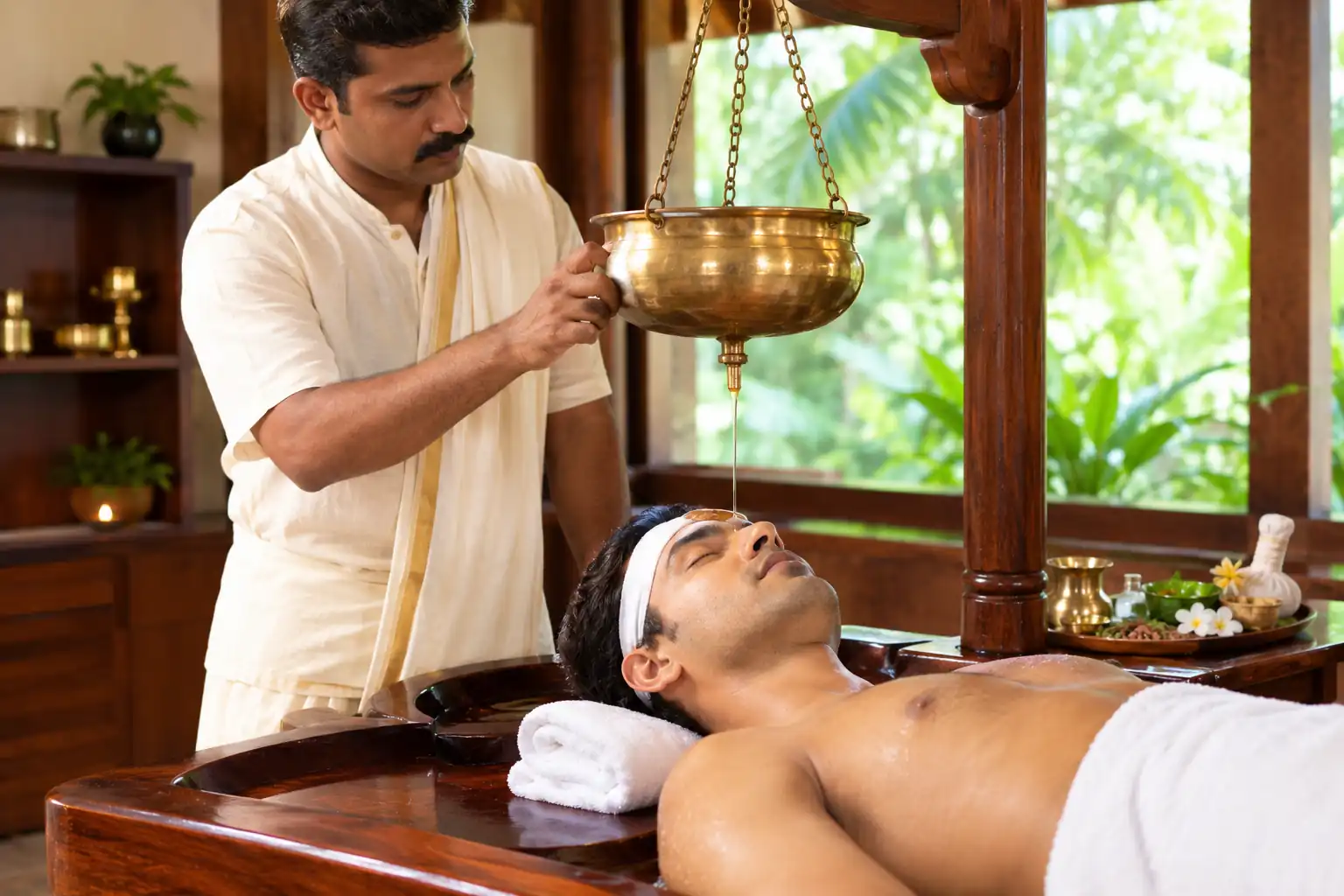
Shirodhara
Shirodhara is a traditional Ayurvedic procedure in which a liquid, often oil or another selected preparation, is poured in a controlled stream over the forehead or head area.
The World Health Organization’s Ayurveda practice benchmark includes Shirodhara among recognized Ayurveda procedures.
Shirodhara may be considered within certain retreat programmes, but it should not automatically be assumed to be suitable for every guest.
The choice of liquid, duration and frequency can depend on the individual’s treatment plan.
It is better to view Shirodhara as one possible component of an Ayurvedic programme rather than a universal relaxation treatment.
Swedana
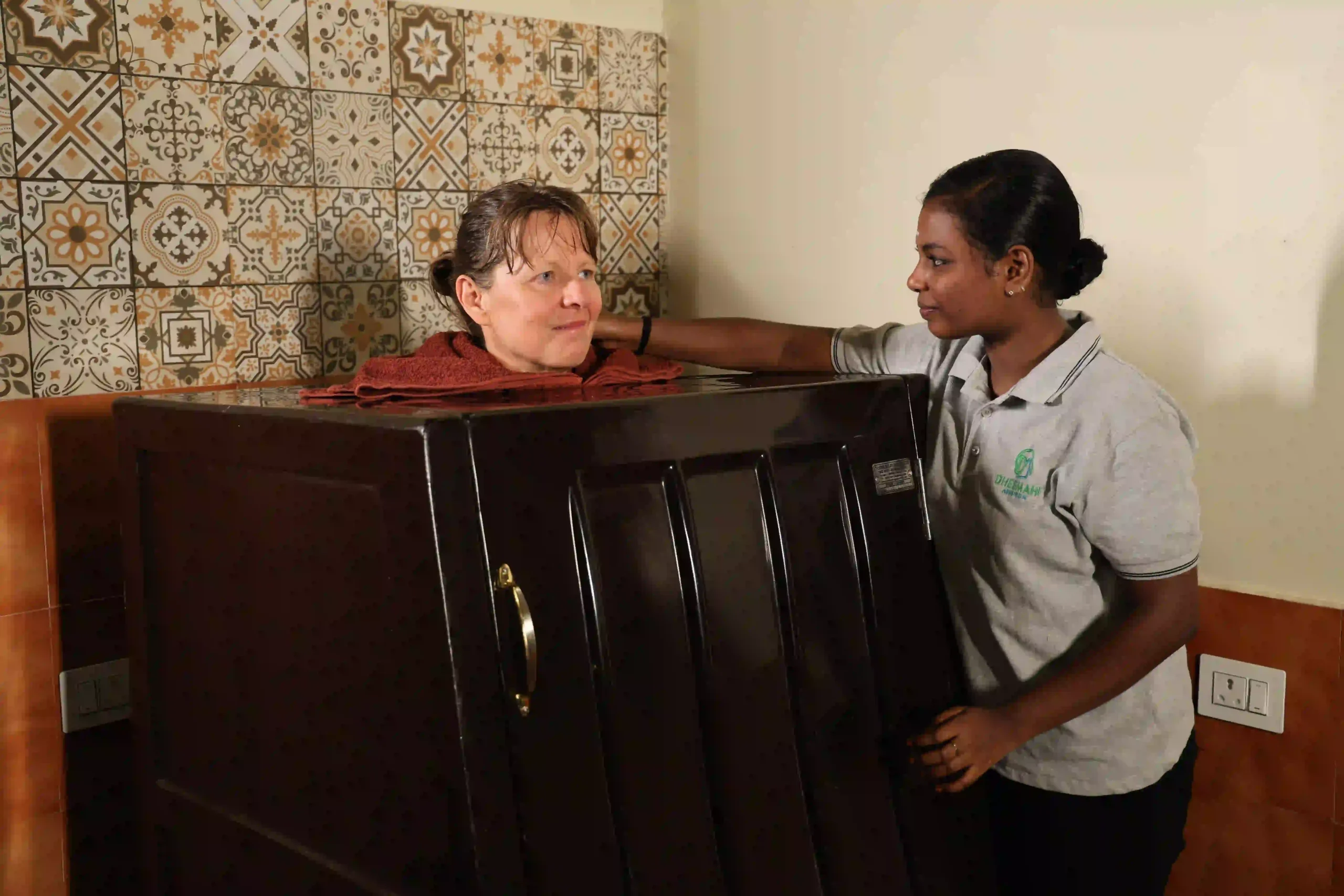
Swedana refers to Ayurvedic fomentation or sweating procedures.
Different forms may be used in Ayurveda, and the specific method can vary according to the treatment plan.
Swedana may sometimes be recommended alongside other therapies, particularly when the physician believes that a preparatory or supportive procedure is appropriate.
Because heat-based therapies may not be suitable for everyone, the treatment should be selected with consideration of the person’s health status.
Kizhi
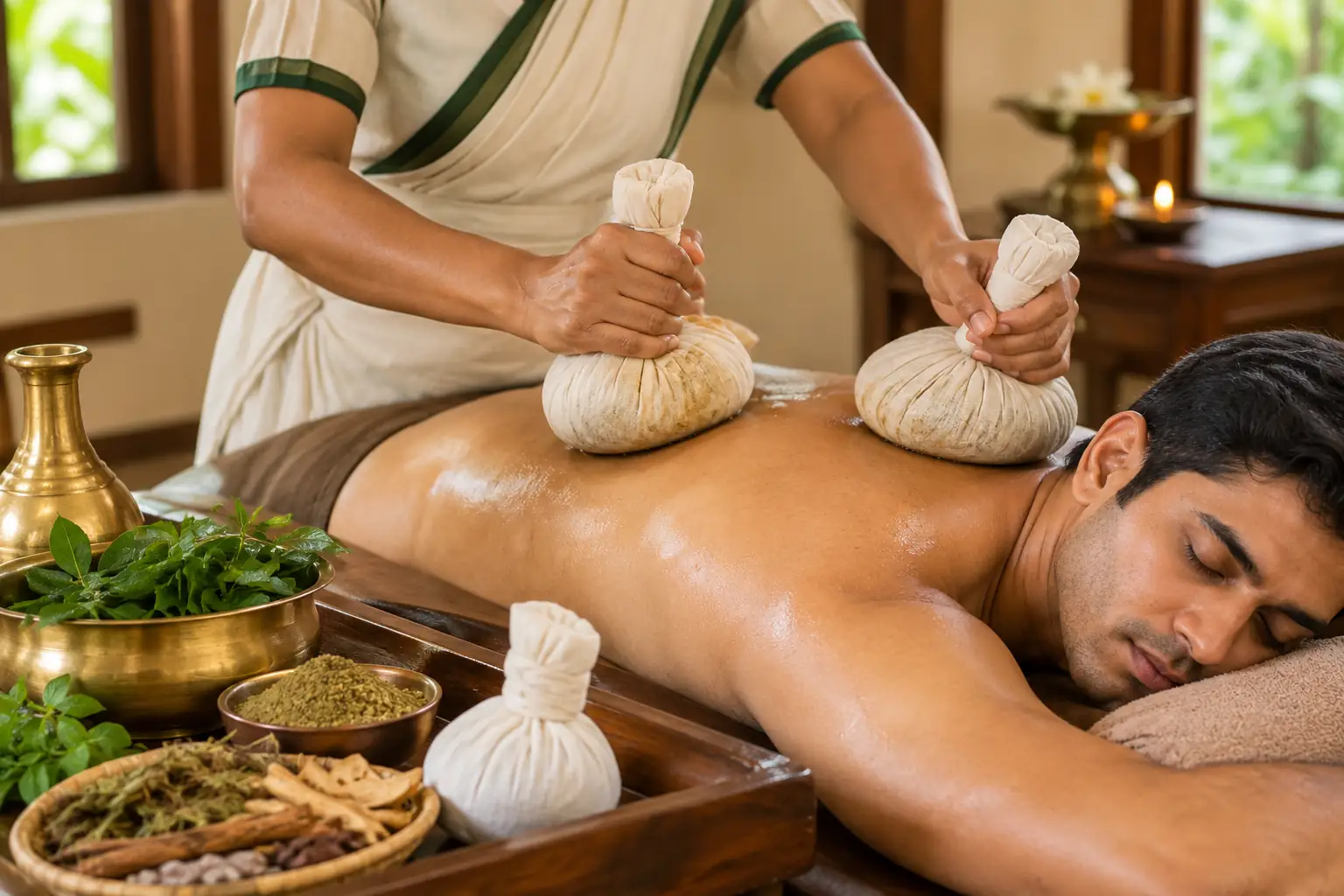
Kizhi refers to a group of Ayurvedic fomentation procedures involving therapeutic boluses or poultices.
Depending on the specific method, the bolus may contain herbs, leaves, powders or other selected ingredients.
The procedure can be adapted according to the treatment plan and the area being addressed.
Different forms of Kizhi may therefore be used for different purposes, and the name alone does not describe one identical procedure.
Guests should ask the treating team which form is being recommended and why it has been selected.
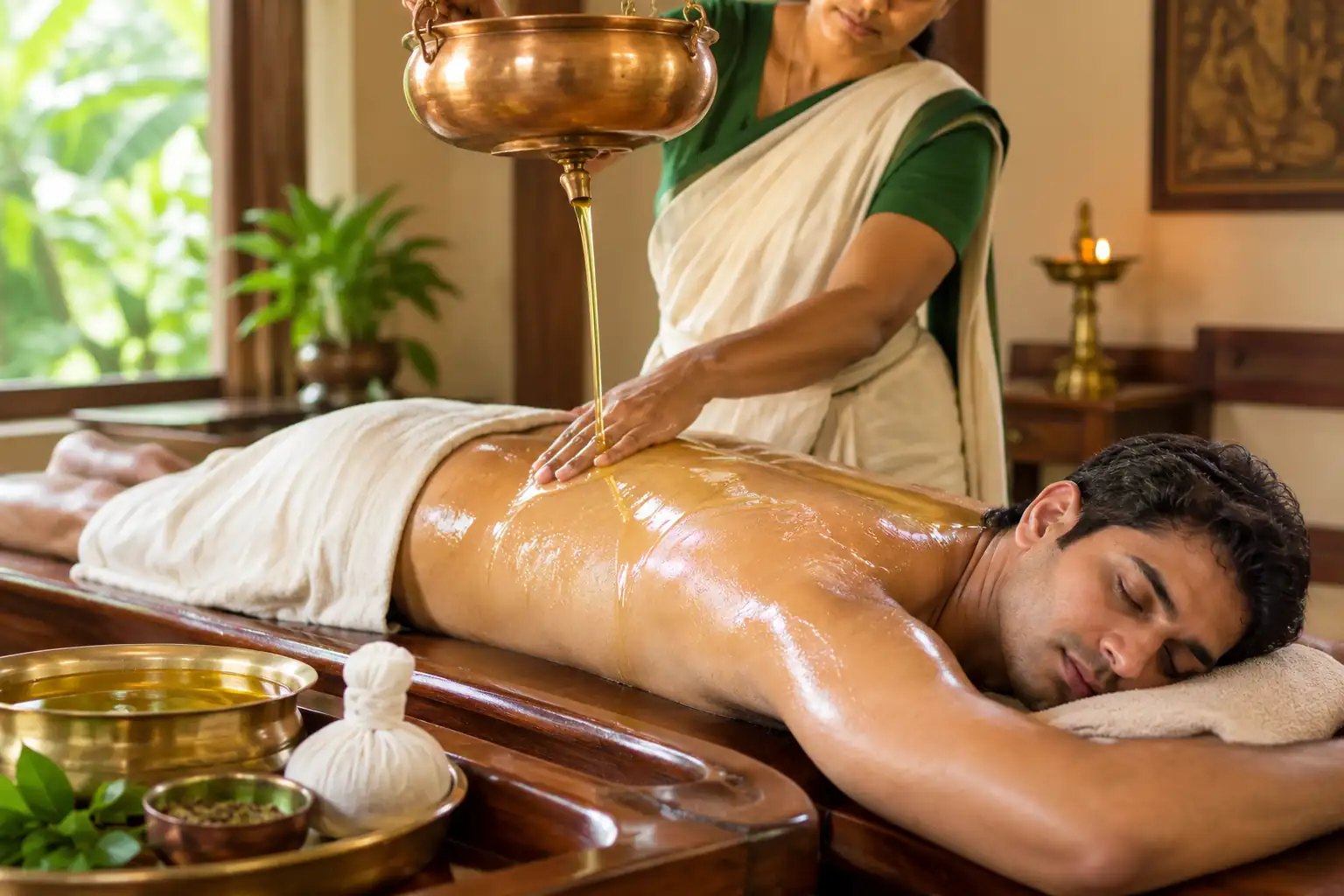
Pizhichil
Pizhichil is a traditional Kerala Ayurvedic procedure involving the controlled pouring of warm medicated oil over the body, generally combined with appropriate therapeutic handling.
The WHO benchmark for Ayurveda practice includes Pizhichil under Dhara-related procedures.
At a retreat, Pizhichil may be recommended as part of an individualised treatment programme.
It should not be presented as a procedure that every guest automatically receives. The choice depends on the clinical assessment and treatment objectives.
Panchakarma Procedures
Panchakarma is a specialised area of Ayurveda involving specific therapeutic procedures. It is not simply another name for an Ayurvedic massage programme.
Depending on the individual and the clinical setting, Panchakarma may involve procedures such as:
- Virechana
- Vasti
- Nasya
- Other preparatory and supportive procedures
The WHO benchmark for Ayurveda practice describes procedures including Virechana, Nasya and Vasti within Ayurveda practice.
Importantly, not every person is suitable for every Panchakarma procedure.
The decision may depend on factors such as:
- Current health status
- Age
- Physical strength
- Medical history
- Digestive status
- Existing medications
- Pregnancy status where relevant
- The specific treatment objective
- Previous treatment experience
A responsible retreat should therefore avoid presenting Panchakarma as a fixed sequence that everyone must undergo.
For readers specifically researching the treatment itself, see our detailed guide to Panchakarma Treatment in Kerala.
If your main concern is the financial side of Panchakarma, the separate Panchakarma Treatment Cost in Kerala page is more relevant.
Virechana
Virechana is a therapeutic purgation procedure used within Ayurveda.
It is one of the procedures associated with Panchakarma and requires appropriate preparation, assessment and aftercare.
Because it intentionally affects the gastrointestinal system, it should not be approached as a casual detox procedure.
An Ayurvedic physician should determine whether it is appropriate for the individual and how the procedure should be carried out.
Diet and activity following the procedure may also form part of the treatment plan.
Vasti
Vasti involves the administration of selected Ayurvedic preparations through the rectal route.
Different forms of Vasti exist within Ayurvedic practice, and their composition and purpose can vary.
The WHO benchmark for Ayurveda practice recognizes different forms of Vasti, including decoction-based and oil-based procedures.
Because this is a therapeutic procedure rather than a general wellness service, it requires proper assessment and trained clinical supervision.
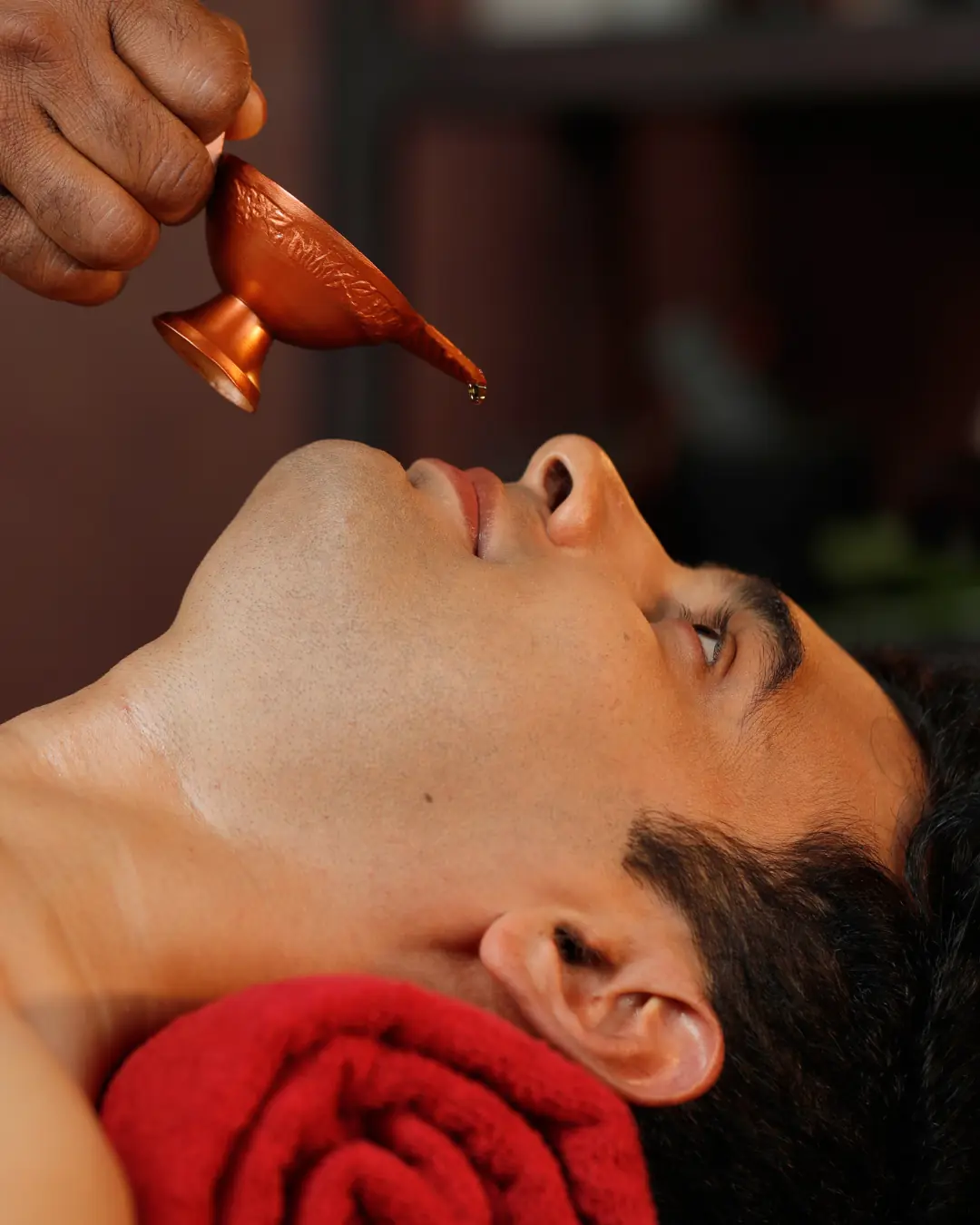
Nasya
Nasya refers to the administration of selected Ayurvedic preparations through the nasal route.
Different types of Nasya are described within Ayurveda, and the preparation, dose and method may differ.
The WHO Ayurveda benchmark includes several forms of Nasya among Ayurveda interventions.
A retreat programme should therefore specify what type of Nasya is being proposed rather than simply listing “Nasya” as a generic treatment.
Localized Ayurvedic Therapies
Some Ayurvedic procedures are designed for particular areas of the body.
Examples may include:
- Kati Vasti
- Local Dhara
- Pichu
- Local oil application
- Selected localized fomentation procedures
These therapies may be considered when the treatment plan focuses on a particular body area.
For example, someone visiting for musculoskeletal concerns may receive localized procedures alongside other therapies, depending on the physician’s assessment.
For readers specifically researching back-pain care, our Ayurvedic Treatment for Back Pain page provides more condition-specific information.
Ayurvedic Medicines
An Ayurveda retreat may also involve internal Ayurvedic medicines.
However, medicines should not simply be added to a retreat package because they are traditional or commonly used.
The choice of medicine, dosage and duration should be determined by an appropriately qualified practitioner.
This is particularly important for people who already take prescription medicines.
WHO notes that interactions between herbal medicines and conventional medicines can be clinically important and require appropriate attention.
Guests should therefore provide the retreat’s medical team with a complete list of current medicines, supplements and relevant medical conditions.
Ayurvedic Diet and Meal Guidance
Food may form an important part of an Ayurveda retreat programme.
Rather than treating diet as a separate spa service, an Ayurvedic programme may use dietary guidance alongside therapeutic procedures.
Recommendations can vary depending on the person’s treatment plan.
A retreat may provide meals designed around the programme, while an Ayurvedic physician or nutrition professional may provide guidance about food choices, meal timing and dietary habits.
The purpose should be appropriate dietary support rather than promising that a particular food plan can treat or cure a medical condition.
Are All Ayurveda Retreat Treatments Included in Every Package?
No.
This is one of the most important points to understand before booking.
A retreat may advertise a broad list of Ayurvedic therapies, but that does not necessarily mean that every guest receives every procedure.
Treatment selection can depend on:
- Individual consultation
- Health history
- Current symptoms
- Age
- Physical condition
- Treatment objectives
- Practitioner assessment
- Response to earlier procedures
This is why a doctor-guided retreat should distinguish between available therapies and therapies actually prescribed for an individual.
For information about what is included in Dheemahi’s affordable residential programme, see the Affordable Ayurveda Retreat in India page. That page focuses on programme options and package information rather than explaining every therapy in detail.
How Is the Right Treatment Selected?
The treatment process should ideally begin with an Ayurvedic consultation.
At Dheemahi, the assessment may consider the person’s health concerns, medical history, lifestyle and individual Ayurvedic assessment before a programme is planned.
The purpose of this process is to avoid treating every guest according to an identical schedule.
A simplified treatment pathway may look like this:
Consultation → Assessment → Treatment planning → Selected therapies → Monitoring → Follow-up
This approach is particularly important when a retreat includes procedures that require preparation, supervision or specific aftercare.
Can One Retreat Include Several Different Therapies?
Yes, depending on the person’s programme.
An Ayurveda retreat may combine different types of procedures over the course of a stay.
For example, a programme could potentially include:
- Consultation
- External oil therapy
- Fomentation
- A selected localized procedure
- Yoga or breathing practices
- Dietary guidance
- Follow-up consultation
However, this does not mean that all therapies are appropriate for everyone.
The sequence can also change during the stay depending on how the individual responds.
Are Ayurveda Retreat Treatments the Same as Spa Treatments?
Not necessarily.
Some Ayurvedic procedures may resemble spa services because they involve massage, oils, warmth or relaxation.
The important distinction is the purpose and clinical context.
A spa treatment is generally selected for relaxation or personal care, while an Ayurvedic therapeutic procedure may be selected as part of a broader treatment plan.
At a doctor-guided Ayurveda centre, treatment selection should be connected to an assessment rather than based solely on guest preference.
This distinction can be especially useful when comparing Ayurveda retreats in India.
Are Ayurveda Retreat Treatments Safe for Everyone?
No treatment is suitable for everyone.
Even traditional therapies may have contraindications or require modifications depending on the individual’s health status.
People with significant medical conditions, those taking multiple medicines, pregnant individuals, older adults with complex health needs and people recovering from recent illness or surgery should disclose relevant information before undergoing treatment.
Some Ayurvedic medicines and preparations can also raise safety concerns. Appropriate quality control, practitioner training and communication with conventional healthcare professionals are therefore important.
WHO emphasizes the importance of safety, quality assurance, appropriate training and regulatory frameworks in traditional medicine practice.
If you have a diagnosed medical condition or are receiving ongoing medical treatment, an Ayurveda retreat should complement—not replace—appropriate conventional medical care.
What Treatments May Be Included at Dheemahi?
Dheemahi Ayurvedic Village offers a range of Ayurvedic therapeutic procedures that may be considered as part of individualized programmes.
Depending on the assessment, the treatment plan may include procedures such as:
- Abhyanga
- Shirodhara
- Pizhichil
- Kizhi
- Swedana
- Virechana
- Vasti
- Nasya
- Udwarthanam
- Localized Ayurvedic procedures
- Yoga
- Meditation
- Pranayama
- Dietary and lifestyle guidance
The presence of a therapy on this list does not mean that it will automatically be prescribed.
The treating physician determines the appropriate combination according to the individual’s assessment and treatment objectives.
Treatment Availability and Programme Information
If you are comparing retreats based primarily on what therapies are available, this page is intended to help you understand the treatment categories.
If you are comparing programme duration, package structure and affordability, visit our Affordable Ayurveda Retreat in India guide.
For Panchakarma-specific information, see:
For condition-specific information, you can also explore:
Plan Your Ayurveda Retreat
Choosing an Ayurveda retreat should involve more than looking at the number of therapies listed on a website.
Consider whether the centre provides:
- Individual consultation
- Qualified practitioners
- Appropriate treatment selection
- Clear programme information
- Transparent inclusions
- Safety and follow-up procedures
- Appropriate referral when conventional medical care is required
If you are interested in exploring a residential Ayurveda programme at Dheemahi Ayurvedic Village, you can review the Affordable Ayurveda Retreat in India programme page or contact the centre to discuss your requirements.
Medical Disclaimer
The information on this page is provided for general educational purposes and should not be considered a substitute for diagnosis, treatment or medical advice from a qualified healthcare professional.
Ayurvedic procedures are not appropriate for everyone. Treatment selection should be based on an individual assessment by a qualified Ayurvedic practitioner, with relevant medical history and current medicines disclosed.
If you have a serious, acute or ongoing medical condition, seek appropriate medical care and discuss any complementary treatment with your healthcare provider.
Medically Reviewed By
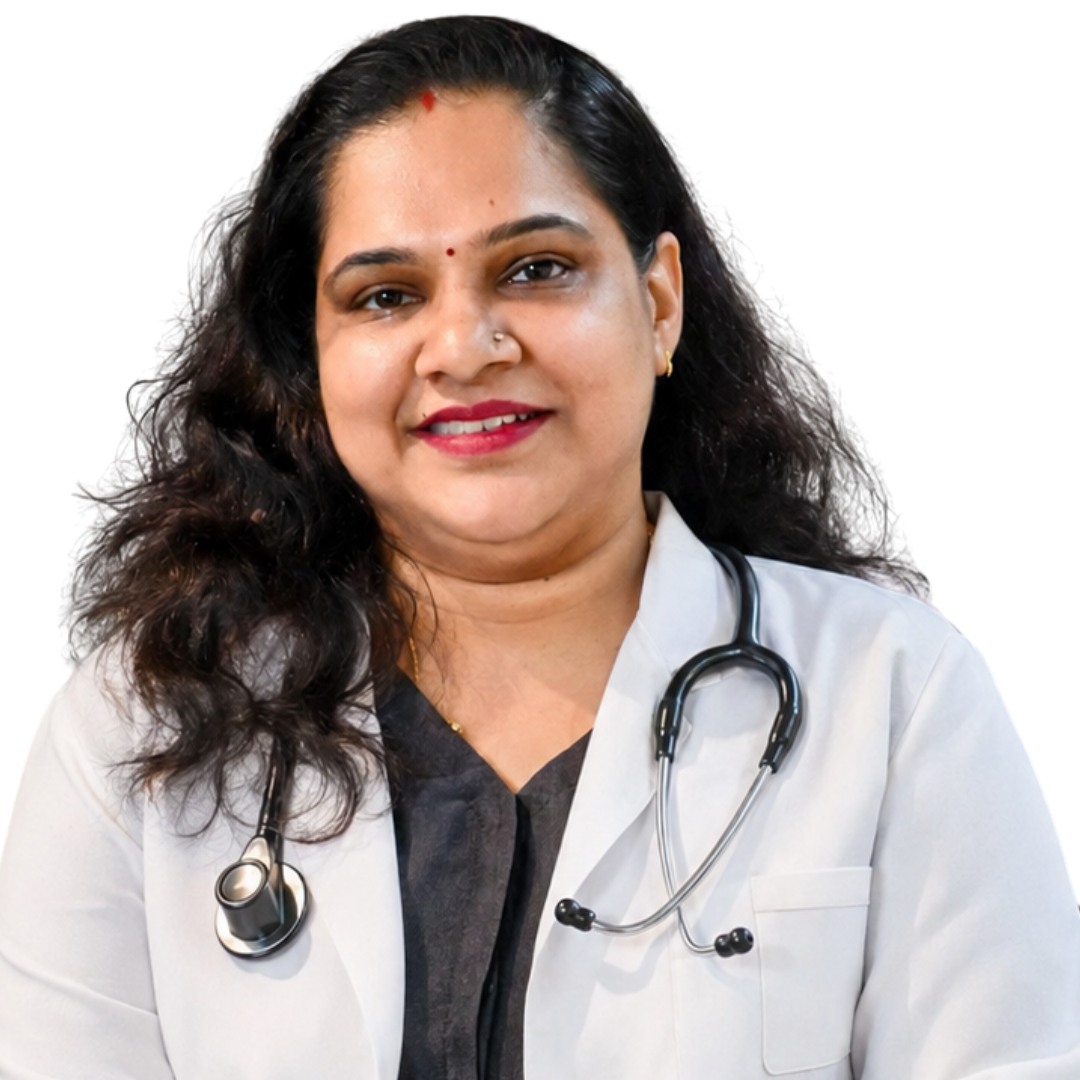
Dr. Pooja Pardeep
Ayurvedic Physician | Dheemahi Ayurvedic Village
Dr. Pooja Pradeep reviewed this article for its discussion of Ayurvedic retreat treatments, including how therapies may be selected according to an individual’s assessment, health history, suitability and treatment needs.
Reviewed On: 16September 2026
Frequently Asked Questions
What treatments are usually included in an Ayurveda retreat?
An Ayurveda retreat may include consultations, oil therapies, fomentation procedures, selected Panchakarma procedures, Ayurvedic medicines, dietary guidance, yoga, meditation and breathing practices. The exact combination varies by individual.
Does everyone receive the same Ayurvedic treatments?
No. A doctor-guided programme may be individualized according to the person’s health history, symptoms, treatment goals and suitability for specific procedures.
Is Panchakarma included in every Ayurveda retreat?
No. Some retreats offer Panchakarma-focused programmes, while others provide broader wellness programmes. Even when Panchakarma is offered, individual procedures should be selected according to suitability.
Is Abhyanga included in an Ayurveda retreat?
Abhyanga may be included in some programmes, but availability and suitability depend on the retreat and the individual’s treatment plan.
Are Shirodhara and Pizhichil included in every programme?
Not necessarily. These are specific Ayurvedic procedures that may be recommended for some guests and not others.
Can Ayurvedic treatments be combined with yoga?
Yes. Many retreats combine therapeutic procedures with yoga, breathing exercises and meditation as supportive practices. The activities should be adapted when necessary for individual physical or medical circumstances.
Should I tell the retreat about my existing medicines?
Yes. Provide complete and accurate information about prescription medicines, over-the-counter medicines and supplements before treatment begins.
How Our Booking Process Works
The unique approach involves a series of discussion during your initial decision-making process to make sure that we will be able to match your expectations with our treatment.
Based on the discussions with you our team of expert doctors will design the best treatment package personalized for your needs.
01
Consultation Form
Fill out our consultation form, and let us know when will you be available for our doctor to talk to you
02
Discussion with Doctor
Discuss your health condition and expectations with our doctor.
03
Booking Confirmation
Confirm the booking by making a payment of 50% advance.
Consultation Form
Submit this form to initiate a booking with us
Have any queries? We will help you. Talk to us now
Say Goodbye to Health Woes & Hello to Healthy Living
Dheemahi Ayurvedic Pvt Ltd
12/386 Varaputhara Road
Kumarakom, Kerala, India
Pin 686563
Dheemahi Ayurvedic Centre, Near Neelimangalam Bridge, Kumaranaloor, Perumbaikad.P.O, Kottayam, Kerala, India, Pin 686016
Other Treatments
Karkidaka Chikilsa | Ayurvedic Treatment for Depression | How to Reduce Stress Naturally | Autoimmune Disorders | Weight-Loss Treatment | Frozen Shoulder Ayurvedic Treatment | Diabetes Ayurvedic Treatment | PCOS Ayurvedic Treatment | Celiac Disease Treatment | ayurvedic treatment for skin diseases | nervous system ayurvedic treatment | Back Pain Ayurvedic Treatment | Cervical Spondylitis Ayurvedic Treatment | ayurvedic treatment for blood sugar | Fatty Liver Ayurvedic Treatment | Knee Pain Ayurvedic Treatment | Migraine Ayurvedic Treatment | Osteoarthritis Ayurvedic Treatment | Psoriasis Ayurvedic Treatment | Sinusitis Ayurvedic Treatment | Ayurvedic Detox Treatment | Ayurvedic Treatment for Rheumatoid Arthritis | Ayurvedic treatment for joint pain | Ayurvedic treatment for ulcerative colitis | Panchakarma Treatment |